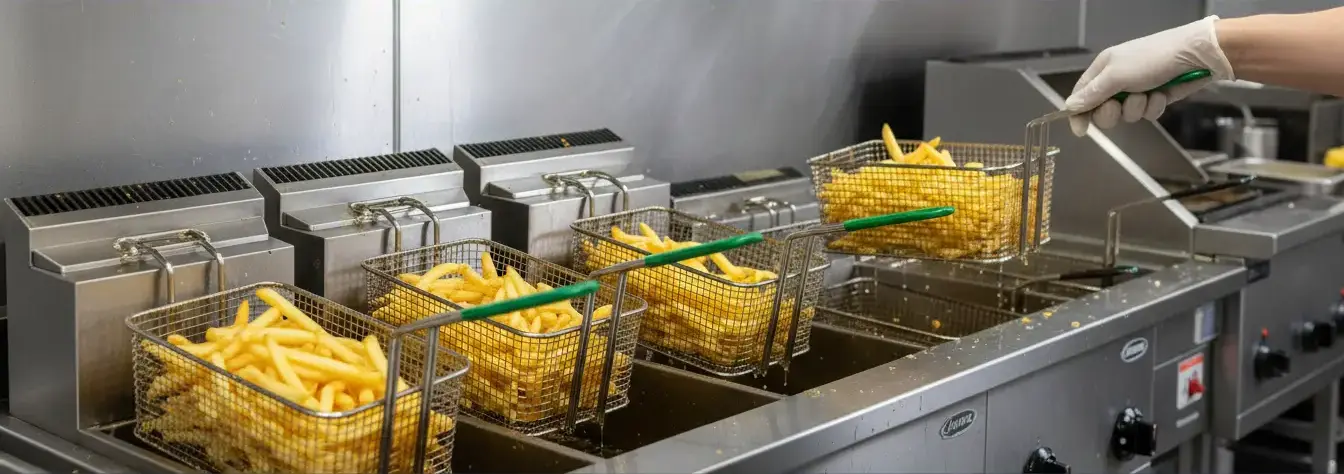
Find the Best Used Cooking Oil Collection Companies for Your Business
No obligation • Fast responses • Nationwide coverage

Why you can trust Restaurant Waste Disposal
Restaurant Waste Disposal is a leading U.S. resource for comparing restaurant composting, food-waste recycling, grease trap cleaning, and used cooking oil collection services. Our editorial team researches providers, checks credentials, and organizes unbiased information so operators can make informed decisions. Companies cannot pay to change ratings or placement.
Search providers near you
Top Used Cooking Oil Collection Companies in Chicopee, Massachusetts Ranked
For restaurants in Chicopee, managing used cooking oil (UCO) is a regulated operational necessity that also presents an opportunity for sustainability and potential cost recovery. Proper collection and recycling of this waste stream are governed by Massachusetts state and local Chicopee Board of Health regulations, requiring partnership with licensed haulers. By adhering to specific storage and handling protocols, food service establishments can ensure compliance, prevent environmental issues, and contribute to a circular economy where their waste oil is transformed into renewable fuels and other products.
Understanding Local Regulations for Grease and Oil Disposal
Navigating the rules is the first step to a compliant and efficient UCO management program. In Chicopee, as in all of Massachusetts, used cooking oil is classified as a waste oil and must be handled according to specific guidelines to protect public health and the environment.
- Licensed Hauler Requirement: Restaurants must contract with haulers authorized by the Chicopee Board of Health for collection. It is illegal to pour oil down drains or dispose of it with regular trash.
- Storage Area Designation: Whether stored indoors or outdoors, the area for UCO containers must be clearly marked. Regulations typically require signage with "Waste Oil" in letters at least one inch high to inform staff and emergency personnel.
- Container Security and Containment: Storage containers and collection tanks must be kept secure to prevent spills, leaks, and theft. They should be placed on an impervious surface with secondary containment (like a spill pallet or berm) to catch any accidental releases.
Non-compliance with these regulations can result in fines from the health department and create significant sanitation and environmental hazards for your business and the community.
The Step-by-Step Process of Oil Recycling
Partnering with a professional collection service streamlines UCO management into a simple, routine operation. Here's how the typical process works from your kitchen to its next life as a sustainable product.
- On-Site Filtration and Storage: After cooling, used fryer oil should be filtered to remove food particulates and then transferred into a dedicated, covered storage container or tank provided by your hauler. Keeping water and debris out maintains oil quality and value.
- Scheduled Pickup: Your licensed hauler will establish a regular collection schedule-weekly, bi-weekly, or monthly-based on your volume. They will pump the oil from your storage container into their specialized collection truck.
- Transport and Processing: The collected oil is transported to a recycling facility. Local providers like Mahoney Environmental or Western Mass. Rendering process the material at their regional plants.
- Transformation into New Products: At the recycling facility, the oil undergoes purification and processing. The primary end product is often biodiesel or renewable diesel, which are cleaner-burning alternatives to fossil fuels. It can also be used in the production of sustainable aviation fuel (SAF), animal feed supplements, or industrial lubricants 1 2.
This closed-loop system ensures that what was once a waste product is recovered as a valuable feedstock for green energy and other industries.
Equipment and Container Solutions
Reliable equipment is the backbone of a hassle-free collection program. Most reputable used cooking oil collection companies provide the necessary infrastructure at no upfront cost as part of their service agreement.
- Storage Tanks and Barrels: Providers typically offer free loaner containers, which range from 55-gallon drums to large, stationary storage tanks (e.g., 300-500 gallons). The right size depends on your kitchen's weekly oil usage and the frequency of pickups.
- Spill Prevention Features: Professional-grade containers include locking lids to prevent tampering, contamination, and pests. They are also constructed from durable, leak-proof materials and often feature built-in filters or screens 3.
- Placement and Accessibility: Your hauler will help determine the optimal location for your container, balancing kitchen workflow efficiency with easy exterior access for pickup crews. Ensuring clear access is crucial for maintaining a consistent schedule.
Find the perfect used cooking oil collection companies for your needs
Get personalized recommendations and expert advice
Potential Value and Rebate Programs
While the primary goal is compliant disposal, used cooking oil has market value. Many collection companies offer rebate or credit programs that can offset service costs or even generate a small revenue stream for your restaurant. The key factor is the volume and quality of oil you generate.
- Volume-Based Tiers: Rebates are typically structured around monthly collection volumes. While exact rates are negotiated with your hauler and fluctuate with commodity markets, general industry examples provide a framework:
- Under 100 gallons/month: Often qualifies for free pickup and recycling, but may not include a rebate.
- 100-300 gallons/month: May generate rebates in the range of $0.10 to $0.25 per gallon.
- Over 300 gallons/month: Higher-volume generators can potentially see rebates from $0.25 to $0.65 per gallon or more 4 5.
- Maximizing Oil Quality: The cleaner your oil (free of water and food solids), the more valuable it is to recyclers. Simple practices like proper filtering and keeping container lids sealed directly impact the rebate you may qualify for 6.
- Service Cost Offset: For many restaurants, the rebate earned from their UCO can fully cover the cost of associated services like grease trap cleaning, turning a cost center into a neutral or even positive operational line item.
Choosing a Service Provider in Chicopee
Selecting the right partner is essential for reliable service and regulatory peace of mind. Look for providers that are fully licensed by the Chicopee Board of Health and offer comprehensive support.
- Local and Regional Providers: Companies like Mahoney Environmental and Western Mass. Rendering service the Chicopee area. They offer not just UCO collection but often a full suite of waste management services, including grease trap cleaning, which can simplify your vendor relationships 7 8.
- Key Service Features: When evaluating providers, inquire about:
- Scheduling Flexibility: Can they accommodate your busy kitchen hours?
- Equipment Provision: Do they supply and maintain appropriate containers?
- Tracking and Reporting: Do they provide documentation for your records, which is helpful for health inspections and sustainability reporting?
- Emergency Response: What is their protocol for spills or missed pickups?
- Getting Started: Contact the Chicopee Health Department for a list of approved haulers. Then, reach out to two or three providers to discuss your specific needs, expected volume, and to obtain detailed service agreements 9.
Best Practices for Restaurant Kitchen Staff
A successful program depends on consistent daily practices by your kitchen team.
- Cool Before Handling: Always allow oil to cool completely before filtering or transferring to prevent burns.
- Filter Regularly: Implement a routine for filtering oil after each use or at least daily to remove food particles.
- Use Designated Equipment: Never use containers meant for UCO to store other liquids. Clearly label all funnels and storage vessels.
- Keep Lids Secure: Always replace the lid on your storage container immediately after adding oil to keep out water and debris.
- Report Issues Promptly: If a container is damaged, leaking, or nearly full ahead of schedule, notify your manager so the hauler can be contacted.
Frequently asked questions
Sources
Footnotes
-
Restaurant Grease Pick Up & Disposal Services in Boston MA - https://www.mahoneyes.com/fryer-oil-disposal-recycling-boston-ma/ ↩
-
What Happens To The Used Cooking Oil Once It Leaves Your Restaurant? - https://www.grandnatural.com/blog/what-happens-to-the-used-cooking-oil-once-it-leaves-your-restaurant.html ↩
-
Waste Oil Management - Mass.gov - https://www.mass.gov/info-details/waste-oil-management ↩
-
Restaurant Used Cooking Oil Recycling & Disposal Guide - https://greaseconnections.com/restaurant-used-cooking-oil-disposal-recycling-revenue-guide/ ↩
-
Used Cooking Oil Disposal: Complete Guide to Grease Pickups - https://greaseconnections.com/used-cooking-oil-disposal-guide-grease-pickups/ ↩
-
Used Cooking Oil Pickup vs Drop-Off - GreasePros Recycling - https://www.greaseprosrecycling.com/used-cooking-oil-pickup-vs-drop-off/ ↩
-
Used Cooking Oil Pickup and Recycling Services in Boston MA - https://www.mahoneyes.com/waste-oil-pickup-recycling-boston-ma/ ↩
-
Restaurant Waste Cooking Oil and Recycling - http://www.westernmassrendering.com/Waste%20Cooking%20Oil%20Recycling.html ↩
-
City of Chicopee, MA Recycling - eCode360 - https://ecode360.com/6479966 ↩