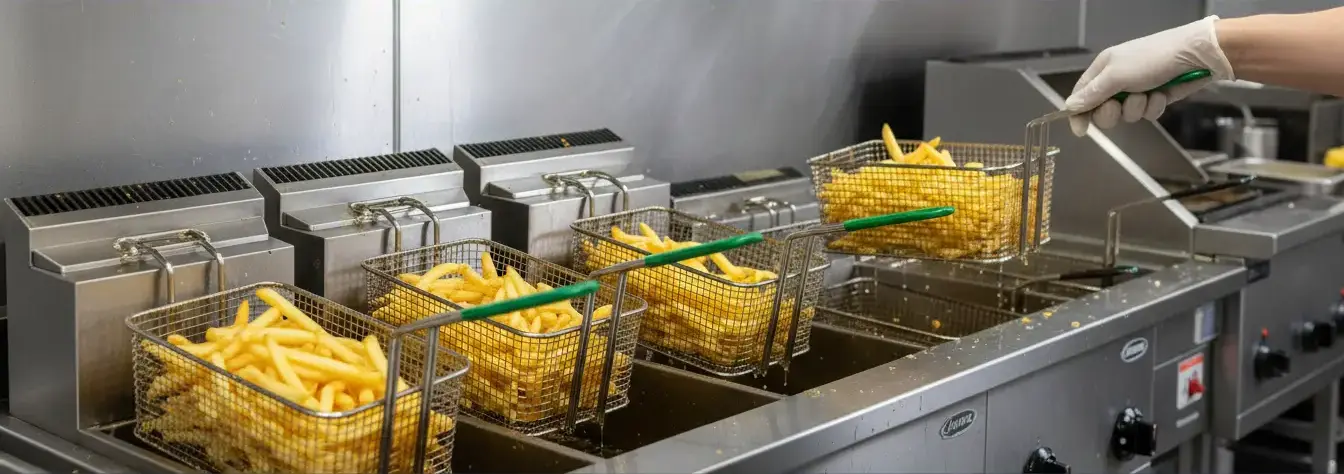
Find the Best Used Cooking Oil Collection Companies for Your Business
No obligation • Fast responses • Nationwide coverage

Why you can trust Restaurant Waste Disposal
Restaurant Waste Disposal is a leading U.S. resource for comparing restaurant composting, food-waste recycling, grease trap cleaning, and used cooking oil collection services. Our editorial team researches providers, checks credentials, and organizes unbiased information so operators can make informed decisions. Companies cannot pay to change ratings or placement.
Search providers near you
Top Used Cooking Oil Collection Companies in Belleville, Illinois Ranked
For restaurants in Belleville, managing used cooking oil (UCO) is far more than a disposal task-it's a strategic operation that can turn a messy waste product into a source of revenue while ensuring strict environmental compliance. The process involves partnering with a licensed hauler who provides containers, schedules regular pickups, and transports the oil to be converted into valuable products like biodiesel. By understanding local Illinois Environmental Protection Agency (IEPA) regulations and implementing best practices for storage and handling, food service establishments can streamline their grease recycling, reduce liability, and potentially earn rebates. This guide outlines the essential steps for effective used cooking oil management specific to the Belleville market.
Ace Grease Service
9035 IL-163, Millstadt, IL 62260
Ace Grease Service is a family-owned company based near St Louis, MO, specializing in used cooking oil collection and grease trap cleaning. With over 31 years of experience, they serve restaurants, hotels, hospitals, penal institutions, and large food manufacturing plants across nine Midwest states. Their services include collecting used cooking oil and cleaning grease traps to help keep kitchens and sewer systems free of fats, oils, and grease. Ace Grease processes and recycles the collected oil into products like plastics, soaps, livestock feed, and biodiesel fuel. They operate a fleet of advanced trucks and equipment to support their service coverage.
Liquid Environmental Solutions
6400 McKissock Ave, St. Louis, MO 63147
Liquid Environmental Solutions is a non-hazardous liquid waste management company based in St Louis, MO. They offer services including used cooking oil collection, grease trap and interceptor cleaning, oil water separator and grit trap cleaning, and wastewater disposal. Serving restaurants, grocery stores, convenience stores, and automotive service businesses, they focus on recycling a high percentage of the food waste they collect. Founded over twenty years ago, the company emphasizes compliance and environmental stewardship in their operations.
Understanding the Used Cooking Oil Recycling Process
The journey from your fryer to renewable fuel is a coordinated effort between your restaurant and your recycling partner. It begins in your kitchen with proper post-use handling. After cooking, oil should be cooled and then filtered to remove food particulates and water, which is crucial for maintaining its quality and value. The filtered oil is then transferred to a designated, leak-proof storage container, typically supplied by your grease collection company.
The collection company, such as a local provider like Millstadt Rendering Company, will establish a pickup schedule based on your volume-whether weekly, bi-weekly, or monthly. On pickup day, a licensed hauler will service your container, pumping the oil into a dedicated tanker truck. The oil is then transported to a rendering facility where it undergoes processing. This processing cleans and refines the material, preparing it to be used as a primary feedstock for biodiesel production, animal feed supplements, or other industrial products. This closed-loop system ensures that what was once waste is given a productive second life.
Compliance and Storage: Meeting Illinois Regulations
Proper storage is not just about convenience; it's a legal requirement in Illinois. The IEPA has specific rules governing used oil to prevent environmental contamination. First, storage containers must be clearly labeled as "Used Oil". These containers, often sturdy drums or larger outdoor tanks provided by your hauler, must be kept in good condition to prevent leaks or spills.
The location of your storage container is also key. It should be placed on a flat, stable surface in a shaded, accessible outdoor area away from high traffic and heat sources. This minimizes the risk of accidents and prevents contamination. For restaurants generating significant volumes, the transportation and storage of used oil may require an IEPA permit, though smaller generators are often exempt 1 2. It's important to note that grease trap waste (brown grease) is regulated separately and requires special shipping papers, a service often bundled with UCO collection by full-service providers 2. Partnering with a knowledgeable local hauler ensures these regulatory details are managed correctly.
Turning Waste into Revenue: Understanding Rebates
One of the most compelling reasons for a structured UCO program is the potential for financial return. High-quality, clean used cooking oil is a commodity. Collection companies purchase this oil to supply the biofuel and rendering industries, and they often share a portion of that revenue back with the restaurant in the form of a rebate.
The rebate amount is not fixed; it depends primarily on two factors: volume and quality. The more oil you generate consistently, the stronger your negotiating position. Quality is paramount-oil contaminated with water, food debris, or other fryer shortening will be worth significantly less, or may even incur a disposal fee 3. To maximize your rebate, maintain a strict filtering routine and keep storage containers sealed.
While rates fluctuate with the market, general volume tiers provide a guideline. For example, in the broader St. Louis/Belleville region, restaurants generating under 100 gallons per month may receive free pickup but no rebate. Those producing between 100-300 gallons monthly might see rebates from $0.10 to $0.25 per gallon. Establishments with high-volume output exceeding 300 gallons per month can potentially earn $0.25 to $0.65 or more per gallon 4 5. Local providers like Millstadt Rendering offer competitive, contract-free rebate programs, allowing Belleville restaurants to convert a waste cost into a straightforward income stream 6 5.
Find the perfect used cooking oil collection companies for your needs
Get personalized recommendations and expert advice
Choosing a Local Collection Partner in Belleville
Selecting the right used cooking oil collection service is a critical business decision. Look for a provider with a strong local presence and a proven track record of reliability and compliance. Key services to expect include the provision of secure, IEPA-compliant storage containers, flexible and dependable pickup schedules, and transparent rebate calculations. Many full-service companies, such as Millstadt Rendering, also offer complementary services like grease trap cleaning and maintenance, allowing you to consolidate vendors and streamline operations 7.
Before committing, ask potential partners about their permitting and insurance, their final destination for the oil (preferably local rendering for biodiesel), and the specifics of their rebate payment structure. A reputable hauler will manage the entire chain of custody, from your back door to the processing plant, ensuring all documentation and environmental regulations are handled professionally 8 9. This partnership not only simplifies your operations but also protects your business from the liabilities of improper waste handling.
Best Practices for Restaurant Kitchen Staff
A successful recycling program relies on daily practices by your kitchen team. Staff training is essential. Everyone involved in oil changes should know to:
- Cool and Filter: Always allow oil to cool before handling. Use a fine filter to remove all food solids after each use or during changes.
- Prevent Contamination: Never mix used cooking oil with water, soap, or other liquids. Keep the storage container lid closed when not in use to keep out rainwater and debris 10.
- Use Designated Containers: Only pour used oil into the hauler-provided collection container. Never use makeshift containers that can leak or break.
- Communicate Issues: Inform a manager immediately if a container is damaged, leaking, or nearing full capacity before the scheduled pickup.
Implementing these simple steps maintains oil quality, ensures safety, and maximizes the operational and financial benefits of your recycling program.
The Environmental and Community Impact
Beyond the bottom line, responsible used cooking oil collection has a profound positive impact. When UCO is recycled into biodiesel, it creates a cleaner-burning alternative to petroleum diesel, reducing greenhouse gas emissions and particulate pollution 11. Diverting this oil from landfills and sewers is equally crucial. Pouring oil down drains is a leading cause of sewer blockages and "fatbergs," which can lead to costly municipal repairs and environmental spills 12.
By participating in a professional collection program, Belleville restaurants directly contribute to a circular economy within the region. The oil collected from local fryers is processed and can end up powering local vehicles or feeding agricultural operations. This sustainable loop supports local industries, reduces waste, and demonstrates a commitment to corporate environmental responsibility, which resonates positively with an increasingly eco-conscious customer base.
Frequently asked questions
Sources
Footnotes
-
Used Oil A Summary of Regulatory Requirements - https://epa.illinois.gov/content/dam/soi/en/web/epa/topics/waste-management/waste-disposal/used-oil/documents/used-oil-regulatory-requirements.pdf ↩
-
Illinois Statutes Chapter 415. Environmental Safety § 5/22.30 - https://codes.findlaw.com/il/chapter-415-environmental-safety/il-st-sect-415-5-22-30/ ↩ ↩2
-
Used Cooking Oil Disposal: Complete Guide to Grease Pickups - https://greaseconnections.com/used-cooking-oil-disposal-guide-grease-pickups/ ↩
-
Restaurant Used Cooking Oil Recycling & Disposal Guide - https://greaseconnections.com/restaurant-used-cooking-oil-disposal-recycling-revenue-guide/ ↩
-
Trusted Restaurant Grease Pickup in Belleville - https://millstadtrendering.com/trusted-restaurant-grease-pickup-in-belleville/ ↩ ↩2
-
Belleville IL Recycling Solutions For Restaurants - https://millstadtrendering.com/belleville-il-recycling-solutions-for-restaurants/ ↩
-
Restaurant Grease Recycling and Other Services - https://millstadtrendering.com/services/ ↩
-
How to Dispose of Cooking Oil For STL Restaurants | MRC - https://millstadtrendering.com/how-to-dispose-of-cooking-oil-for-stl-restaurants/ ↩
-
STL Restaurant Cooking Oil Pickup & Recycling | Millstadt ... - https://millstadtrendering.com/used-cooking-oil-pickup-recycling/ ↩
-
How to Store Used Cooking Oil Safely Before Pickup - https://millstadtrendering.com/how-to-store-used-cooking-oil-safely-before-pickup/ ↩
-
Cooking Oil Recycling - Hopkins Grease Company - https://www.hopkinsgrease.com/cooking-oil-recycling/ ↩
-
Used Oil - Illinois Environmental Protection Agency - https://epa.illinois.gov/topics/waste-management/waste-disposal/used-oil.html ↩