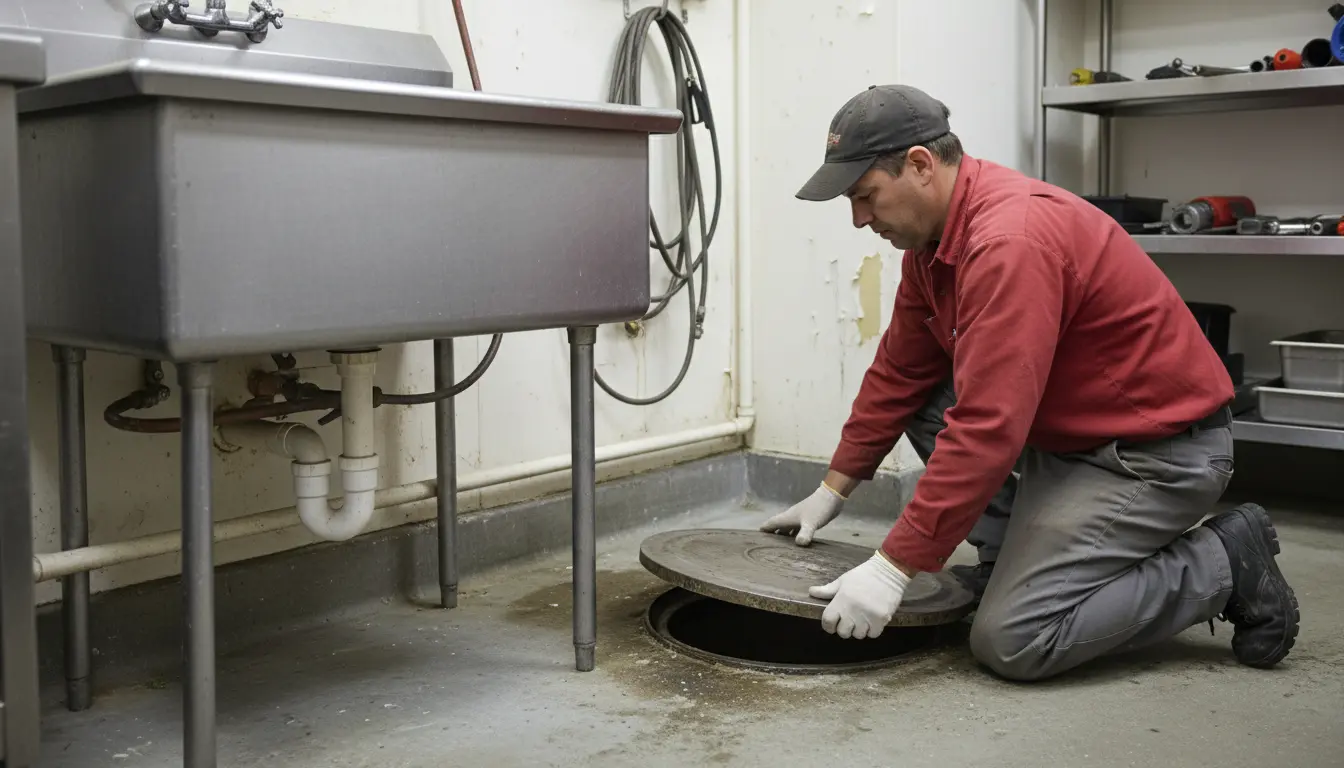
Find the Best Grease Trap Cleaning Companies for Your Business
No obligation • Fast responses • Nationwide coverage

Why you can trust Restaurant Waste Disposal
Restaurant Waste Disposal is a leading U.S. resource for comparing restaurant composting, food-waste recycling, grease trap cleaning, and used cooking oil collection services. Our editorial team researches providers, checks credentials, and organizes unbiased information so operators can make informed decisions. Companies cannot pay to change ratings or placement.
Search providers near you
Top Grease Trap Cleaning Companies in Hilo, Hawaii Ranked
For any restaurant, food truck, or commercial kitchen in Hilo, managing fats, oils, and grease (FOG) is a critical operational and legal responsibility. Grease trap cleaning, also known as interceptor pumping or grease removal, is the essential service that keeps these systems functioning and your business compliant with local health and environmental codes. Neglecting this maintenance can lead to severe sewer blockages, unpleasant odors, costly plumbing emergencies, and significant fines from regulatory bodies. This resource is designed to help Hilo food service operators understand the specific regulations, best practices, and service considerations for effective FOG management, connecting you with the information needed to maintain a smooth-running and compliant kitchen.
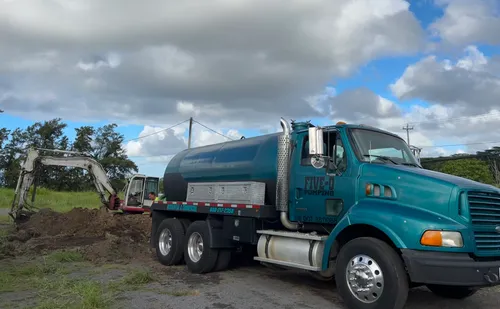
Understanding Grease Traps and Interceptors in Hilo
A grease trap or grease interceptor is a plumbing device designed to capture FOG from wastewater before it enters the public sewer system. In Hilo, as part of Hawaii County, these devices are not optional; they are mandated by code for most food service establishments. The primary goal is to prevent FOG from congealing in sewer lines, which can cause backups, overflows, and environmental damage. Properly sized and maintained interceptors protect your property, the community's infrastructure, and our island's sensitive ecosystem.
Local regulations are typically based on the Uniform Plumbing Code (UPC) and enforced by the Hawaii County Department of Public Works in conjunction with the Hawaii State Department of Health (DOH). The specific requirements for your establishment, including the mandated size (capacity) of your interceptor, are determined by your kitchen's plumbing fixture flow rates and the type of food you prepare.
Hawaii County and State Regulations You Must Know
Compliance is non-negotiable. The Hawaii State Department of Health sets foundational rules in Chapter 50 of the Food Safety Code, but Hawaii County has its own FOG Management Plan with enforcement authority 1. Key compliance points for Hilo businesses include:
- Mandatory Sizing & Installation: Your grease interceptor must be correctly sized according to UPC standards and local amendments. An undersized trap will fail to capture grease effectively and will not pass inspection 2 3.
- Required Cleaning Frequency: While state and county rules often specify a minimum (e.g., every 90 days), the actual required frequency for your business is based on your trap's capacity and your kitchen's FOG production. High-volume establishments like busy diners or fast-food restaurants may be required to have monthly pump-outs. The rule is typically to clean the trap before it reaches 25% of its liquid capacity.
- Strict Record-Keeping: You are required to maintain detailed logs of every grease interceptor service. These records must include the date, the name of the service company, the volume of FOG and solids removed, and the disposal method. These logs must be available for review during inspections by county or state officials 4.
- Regular Inspections: Enforcement agencies conduct inspections to verify proper interceptor sizing, maintenance, and record-keeping. They will check for evidence of bypassing the trap, overflows, and improper waste disposal.
Failure to adhere to these regulations can result in substantial penalties. Fines can start at $1,000 or more for a first offense, and severe or repeated violations can lead to immediate business closure orders 5 6. Proactive maintenance is far less expensive than reactive penalties.
Determining Your Cleaning Schedule & Best Practices
The standard guideline of cleaning every 1 to 3 months is a starting point, but your optimal schedule is unique to your operation 7. Factors influencing frequency include:
- Type of Cuisine: Kitchens serving fried foods, meats, or dairy-heavy dishes produce more FOG.
- Volume of Business: A high-turnover restaurant will fill its trap faster than a low-volume cafe.
- Trap Size: A properly sized trap for your volume may allow for less frequent service than an undersized one.
Beyond simple pumping, a comprehensive maintenance service should include inspecting the interceptor's baffles, gaskets, and inlet/outlet pipes for wear or damage. This proactive approach can identify small issues before they become major repairs or compliance failures 8.
Best practices for your kitchen staff are equally important:
- Never pour liquid grease, oils, or food scraps down the drain.
- Use sink strainers to catch solids.
- Scrape plates and cookware into a trash or compost bin before rinsing.
- Consider installing a pre-rinse screen or small under-sink grease trap as a first line of defense.
Find the perfect grease trap cleaning companies for your needs
Get personalized recommendations and expert advice
What to Expect from a Professional Service
When you hire a professional for grease trap pumping or interceptor cleaning in Hilo, you're paying for expertise, proper disposal, and documentation. A reputable service provider will:
- Pump Out Contents: Remove all FOG, solids, and wastewater from the interceptor.
- Clean the Unit: Scrape and wash the interior walls and baffles to remove hardened grease.
- Inspect the System: Check for structural integrity, leaks, and component wear.
- Provide Documentation: Issue a detailed service report that you can file for your compliance records. This is your proof of maintenance.
- Dispose of Waste Legally: Transport the collected FOG to an approved rendering plant, wastewater treatment facility, or biodiesel producer, in accordance with Hawaii regulations.
Cost of Grease Trap Cleaning in Hilo
Investing in regular service is a cost of doing business that prevents far larger expenses. Prices in Hilo vary based on several factors 9 10 11:
- Interceptor Size: This is the primary cost driver.
- Small/Medium Traps (Indoor, 30-200 gallons): $125 - $250 per pump-out. Contracted recurring service often offers a better rate than one-time emergency calls.
- Large In-Ground Systems (500-1,000+ gallons): $400+ per service, with costs rising significantly for very large or complex systems.
- Service Frequency: Regularly scheduled maintenance is typically cheaper per visit than sporadic or emergency cleanings.
- Location & Access: Easily accessible traps cost less to service than those in confined spaces or requiring special equipment.
- Additional Services: Extra costs may apply for jetting connected lines, repairing components, or handling particularly challenging waste.
Remember, the cost of a single fine or a sewer backup on your property will almost always exceed years of scheduled maintenance. Regular grease trap cleaning is a clear financial and operational imperative.
Frequently asked questions
Sources
Footnotes
-
chapter 50 food safety code - Hawaii State Department of Health - https://health.hawaii.gov/san/files/2013/04/Ch-50-draft-standard-format-6.1.2017.pdf ↩
-
Grease Trap Regulations and Compliance: What You Need to ... - https://www.texwaywastewater.com/grease-trap-regulations-and-compliance/ ↩
-
SECTION 9 SOURCE CONTROL 9-01 GREASE, OIL AND/OR ... - https://www.centralsan.org/sites/main/files/file-attachments/section_9_source_control_0.pdf ↩
-
Department of Environmental Services City and County of Honolulu - https://www.honolulu.gov/env/wp-content/uploads/sites/29/2025/05/wwm_RulesRelatingtoGreaseInterceptorProgramCompliance2002.pdf ↩
-
How to Clean a Grease Trap (and How Often You Should) - https://greaseconnections.com/how-to-clean-a-grease-trap-and-how-often-you-should/ ↩
-
Grease Pumping and Cleaning Services | Bio-Care of Hawaii - https://www.biocareofhawaii.com/servicesafa66200 ↩
-
Restaurant Grease Trap Cleaning FAQs - Mahoney Environmental - https://www.mahoneyes.com/restaurant-grease-trap-cleaning-faqs/ ↩
-
Restaurant Grease Trap Maintenance: A Complete Guide for Kitchen Efficiency - https://boh.ai/blog-article/restaurant-grease-trap-maintenance-a-complete-guide-for-kitchen-efficiency ↩
-
Ultimate Grease Trap Pumping Cost Guide: Essential Money-Saving ... - https://www.texwaywastewater.com/grease-trap-pumping-cost/ ↩
-
The Cost To Clean A Grease Trap For Restaurants - https://thegreasecompany.com/blog/greasetrapcleaningcost/ ↩
-
Grease Trap Cleaning Prices | Guide on the Industry Average - https://grease-cycle.com/grease-trap-pumping-cost/ ↩