Find the Best Composting & Food Waste Companies for Your Business
No obligation • Fast responses • Nationwide coverage

Why you can trust Restaurant Waste Disposal
Restaurant Waste Disposal is a leading U.S. resource for comparing restaurant composting, food-waste recycling, grease trap cleaning, and used cooking oil collection services. Our editorial team researches providers, checks credentials, and organizes unbiased information so operators can make informed decisions. Companies cannot pay to change ratings or placement.
Search providers near you
Top Composting & Food Waste Companies in Philadelphia, Pennsylvania Ranked
For Philadelphia restaurants and food service businesses, managing organic waste is not just an environmental choice-it's a regulatory requirement. The city mandates that establishments handle "grindable" food scraps, including produce, leftovers, and small bones, separately from regular trash. This ordinance drives a growing ecosystem of private haulers and community-based solutions, transforming what was once landfill-bound waste into valuable compost. Navigating these options effectively can help your business comply with local laws, reduce overall waste hauling costs, and contribute to the city's sustainability goals.
The primary pathways for compliance involve either installing an in-sink disposal unit, where the city's water department captures the material for energy and fertilizer production, or contracting with a licensed hauler for regular collection. For most restaurants, the latter option is more practical, leading to a partnership with a specialized organic waste recycler. These services provide the containers, schedule, and processing needed to turn your kitchen's food scraps into a resource, closing the loop in Philadelphia's local food system.
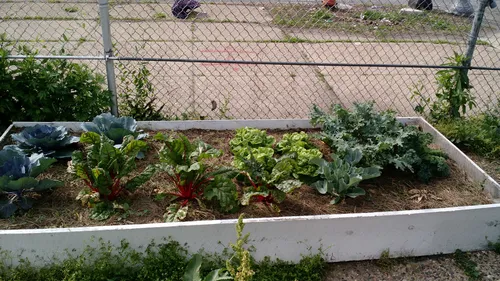
Bennett Compost
5650 Rising Sun Ave, Philadelphia, PA 19120
Bennett Compost provides food waste and composting services for restaurants and residents in Philadelphia, PA. The company offers weekly pickups of food scraps and other compostable materials, helping to reduce landfill waste by diverting organic material into nutrient-rich compost. Bennett Compost serves a variety of clients including coffee shops, breweries, florists, offices, and residential buildings, tailoring solutions to different compostable volumes. Founded in 2009 by Tim Bennett and now co-owned with Jennifer Mastalerz, the company diverts over 150 tons of waste each month and supports more than 6,000 households and businesses. Their service includes delivering clean compost bins and premium compost products during pickups.
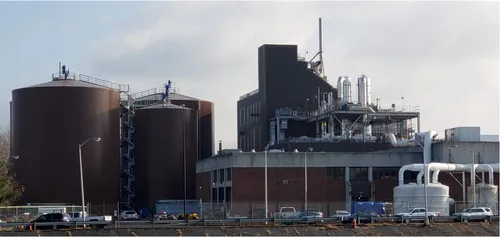
Trenton Renewables
1600 Lamberton Rd, Trenton, NJ 08611
Trenton Renewables is a food waste recycling and renewable energy company based in Trenton, NJ. They serve restaurants and other organizations by managing food waste through anaerobic digestion, converting it into renewable energy, premium compost, and recaptured packaging. The company operates as a Class I Renewable Energy Facility and is qualified under New Jersey's Food Waste Law. Their process helps reduce landfill waste and CO2 emissions while supporting environmental sustainability.
Understanding Philadelphia's Food Waste Ordinance
The cornerstone of commercial organics management in Philadelphia is City Ordinance § 10-722. This regulation requires any business using a dumpster-which includes virtually all restaurants-to manage their grindable food waste separately. The term "grindable" encompasses a wide range of material generated in a commercial kitchen: fruit and vegetable peels, cores, plate scrapings, spoiled food, and even small bones and meat scraps.
The law is designed to keep this nutrient-rich material out of landfills, where it decomposes anaerobically and produces methane, a potent greenhouse gas. By diverting it, the city aims to reduce its environmental footprint and create a circular economy for organic resources. Non-compliance isn't just a missed sustainability opportunity; businesses are responsible for adhering to these waste separation rules as part of their standard commercial operations.
Service Models for Restaurants
Philadelphia's market offers several models for food scrap collection, allowing businesses to choose a solution that fits their volume, budget, and operational flow.
Private Hauler Services: This is the most common and comprehensive solution for restaurants. Companies like Mother Compost and Circle Compost specialize in commercial organics collection. They provide dedicated containers, from 5-gallon buckets for smaller volumes to large, wheeled Toters for high-output kitchens. These services typically offer flexible pickup schedules-daily, twice-weekly, or weekly-to match your production cycle. The hauler transports the collected scraps to a commercial composting facility, where they are processed into soil amendment. Some providers, like BioCycle, even offer the option for businesses to receive finished compost back for use in landscaping or community gardens.
Community Compost Network: For smaller cafes, bakeries, or businesses with limited space and volume, the city-supported Community Compost Network presents an alternative 1. This network consists of drop-off sites at community gardens, parks, and farms across Philadelphia. Businesses can transport their own pre-collected food scraps to these sites. The network often provides initial training and resources to ensure material is properly prepared. This model fosters a direct, hyper-local connection, as the scraps are composted and used within the same neighborhood 1.
In-Sink Disposal (Food Waste Disposers): The ordinance explicitly allows for the use of in-sink disposals (often called garbage disposals) as a compliance method. When food scraps are ground and sent down the drain, they enter the city's wastewater system. The Philadelphia Water Department then captures this material at its treatment plants, where it can be anaerobically digested to produce biogas (a renewable energy source) and biosolids (used as fertilizer). This is a "out of sight, out of mind" option but requires appropriate plumbing and may not be suitable for very high-volume operations.
What You Can and Cannot Compost
Clear guidelines on acceptable materials are crucial for a successful program and to avoid contamination, which can disrupt the composting process.
Acceptable Food Scraps:
- All fruit and vegetable scraps (peels, cores, rinds, spoiled produce)
- Coffee grounds and paper filters
- Tea bags (staples removed)
- Eggshells and nut shells
- Bread, grains, and pasta
- Plate scrapings and leftover cooked food
- Small bones and meat scraps (accepted by most private haulers)
Not Acceptable (Contaminants):
- Fats, Oils, and Grease (FOGs): These materials do not break down effectively in standard composting and can attract pests. They must be managed separately, often through a grease trap service and used cooking oil collection.
- Plastics, Glass, and Metals: This includes so-called "compostable" or "biodegradable" plastic serviceware, which typically requires industrial processing not available in all facilities. Always check with your specific hauler.
- Liquids: Soups, sauces, and cooking oils should not be poured into compost bins.
- Non-Organic Trash: Any conventional packaging, rubber bands, twist ties, or other general waste.
Find the perfect composting & food waste companies for your needs
Get personalized recommendations and expert advice
Containers, Logistics, and Operational Integration
Implementing a food waste program requires some logistical planning. Private haulers will supply the containers. A common setup involves placing several 5-gallon buckets with tight-fitting lids in key prep and dish areas. Staff empty these into a larger, wheeled Toter (similar to a recycling bin) stored in a back alley or service area 2. The hauler will specify the pickup schedule-for example, placing the full Toter curbside on Tuesday and Friday nights for Wednesday and Saturday morning collection.
Successful integration depends on staff training. Clear signage (often provided by the hauler) in English and other relevant languages, placed above collection bins, is essential. A brief training session during a pre-shift meeting can explain the "why" and the "what," helping to ensure proper sorting and reduce contamination from the start. Many services offer educational support to help businesses launch their programs smoothly.
Cost Considerations and Potential Savings
The cost for commercial food scrap collection varies significantly based on factors like collection frequency, volume, location, and the specific hauler 3 4. While there is a direct fee for the composting service, businesses often see an offsetting reduction in their general waste hauling costs. By diverting heavy, wet organic material from the trash dumpster, you may be able to reduce the size of your garbage container or the frequency of its pickup, leading to lower bills from your solid waste hauler 5.
For context, residential composting services in the area can charge around $21 per month for weekly bucket pickup 6. Commercial rates are custom-quoted. It is advisable to contact several licensed providers to request quotes based on your estimated weekly volume. When evaluating costs, consider the full value: regulatory compliance, enhanced sustainability profile, potential waste hauling savings, and the positive community impact of diverting waste from landfills.
Resources and City Support
While Philadelphia does not offer a city-wide municipal food scrap collection service for businesses, several resources are available to guide you:
- City of Philadelphia Commercial Waste Guide: A comprehensive document outlining all commercial waste regulations 7.
- A Philadelphia Business' Guide to Reducing Food Waste: A dedicated guide from the city with steps for waste reduction and management 8.
- Circular Philadelphia: An organization focused on building a circular economy in the city, with specific programs and information on food systems and urban composting 9 10.
- FarmPhilly: A division of Philadelphia Parks & Recreation that manages the Community Compost Network and offers resources for community-scale composting 11.
Engaging with these resources can help you build a compliant, cost-effective, and environmentally sound organics management strategy for your Philadelphia restaurant.
Frequently asked questions
Sources
Footnotes
-
Philadelphia Parks & Recreation Community Compost Network Is ... - https://www.phila.gov/2025-07-07-philadelphias-community-compost-network-is-growing-apply-now/ ↩ ↩2
-
Mother Compost - Small Choice, Big Impact - Philadelphia Main ... - https://mothercompost.com/ ↩
-
Philadelphia commercial composting - restaurants, cafes, etc - https://www.circlecompost.com/commercial/ ↩
-
The Philadelphia Composting Story | BioCycle - https://www.biocycle.net/the-philadelphia-composting-story/ ↩
-
Food Waste Management for Commercial Properties - https://www.phila.gov/media/20210811115122/Sustainability-food-waste-management-commercial-2-pager.pdf ↩
-
Food Scraps Programs In The United States - https://www.biocycle.net/food-scraps-programs-in-the-united-states/ ↩
-
Commercial Waste Report Guide - City of Philadelphia - https://www.phila.gov/media/20201014160608/Commercial-Waste-Report-Guide.pdf ↩
-
A Philadelphia Business' Guide to Reducing Food Waste - https://www.phila.gov/2021-08-11-a-philadelphia-business-guide-to-reducing-food-waste/ ↩
-
Food Systems - Circular Philadelphia - https://circularphiladelphia.org/programs/market-transformation/food-systems/ ↩
-
Urban Composting - Circular Philadelphia - https://circularphiladelphia.org/programs/market-transformation/food-systems/urban-composting/ ↩
-
Community composting | Programs and initiatives - City of Philadelphia - https://www.phila.gov/programs/farmphilly/community-composting/ ↩