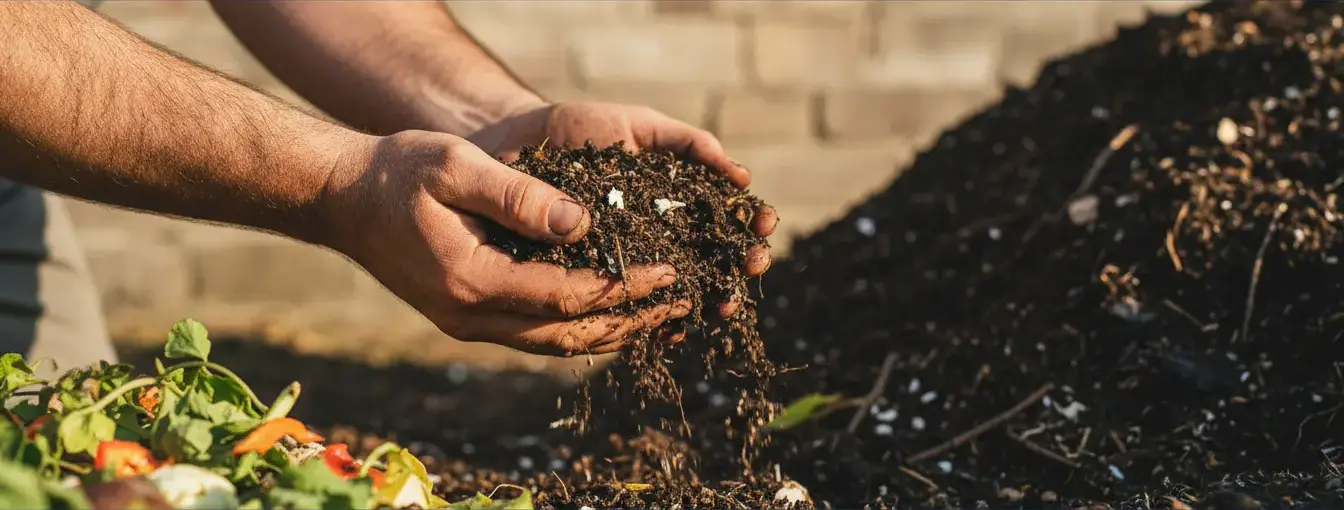
Find the Best Composting & Food Waste Companies for Your Business
No obligation • Fast responses • Nationwide coverage

Why you can trust Restaurant Waste Disposal
Restaurant Waste Disposal is a leading U.S. resource for comparing restaurant composting, food-waste recycling, grease trap cleaning, and used cooking oil collection services. Our editorial team researches providers, checks credentials, and organizes unbiased information so operators can make informed decisions. Companies cannot pay to change ratings or placement.
Search providers near you
Top Composting & Food Waste Companies in Atlanta, Georgia Ranked
For Atlanta's vibrant restaurant scene, managing food scraps and organic waste is no longer just a back-of-house chore-it's a strategic operational and environmental priority. Implementing a robust composting and food waste diversion program can transform waste streams into valuable resources, reduce disposal costs, and align with growing consumer expectations for sustainability. The process involves partnering with specialized private haulers, understanding local regulations, and training staff to separate materials correctly. By diverting organic matter from landfills, Atlanta restaurants contribute to a circular economy, creating nutrient-rich compost for local agriculture and reducing methane emissions.
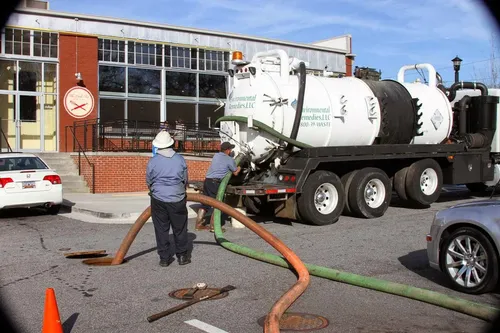
Understanding Your Food Waste Stream
The first step toward effective management is assessing what your restaurant throws away. A typical Atlanta kitchen generates a variety of compostable materials beyond just plate scrapings. This includes food preparation scraps like vegetable peels, fruit cores, and eggshells, as well as coffee grounds with their paper filters, tea bags, and nut shells. Many providers also accept soiled, non-recyclable paper products like napkins, pizza boxes, and paper towels 1. Crucially, some local services are equipped to handle fats, oils, and grease (FOG), which are often challenging waste products for food service establishments.
Identifying these materials helps you choose the right service and container sizes. It also highlights opportunities for upstream reduction and donation. Edible food that is unsold but still safe for consumption can be donated through partners like goodr.co, offering potential tax benefits while addressing food insecurity in the Atlanta community.
Key Service Providers and Collection Options
Atlanta restaurants have access to several dedicated commercial organics haulers. Companies like CompostNow and goodr.co offer tailored services for the hospitality industry. These providers handle the entire process, from supplying collection containers to transporting waste to permitted composting facilities.
- CompostNow: Focuses on comprehensive compost collection, providing bins and regular pickups. They work with businesses to set up a system that fits their volume and schedule.
- goodr.co: Offers a dual-pronged approach. Their platform facilitates the donation of surplus edible food to non-profits for tax-deductible receipts. For inedible food scraps and compostables, they partner with haulers to ensure diversion from landfills.
Services are flexible. Pickup frequency can range from daily to weekly, depending on your kitchen's output and space constraints. Container options are equally adaptable, starting with small 5-gallon kitchen pails for line cooks and scaling up to 64-gallon wheeled carts or even large dumpsters and roll-off containers for high-volume establishments.
Logistics and Staff Training for Success
Successful implementation hinges on seamless logistics and a well-trained team. Once you select a provider, they will typically conduct an onboarding assessment to determine the optimal bin placement and pickup schedule. Clear, consistent signage in both English and Spanish is vital for kitchens with diverse staff2.
Staff training is the most critical component. The Georgia Restaurant Association emphasizes that preventing contamination-the mixing of non-compostable items into the organics stream-is essential. Training should cover:
- What items are accepted (e.g., food scraps, BPI-certified compostable serviceware).
- What constitutes contamination (e.g., plastic wrap, rubber bands, metal, glass, Styrofoam).
- The proper use of color-coded bins or pails. A simple, well-communicated system prevents entire loads from being rejected at the composting facility, ensuring your efforts are effective.
Costs, Savings, and Business Benefits
While there is a cost for professional collection services, it is often offset by significant savings and benefits. Most providers use a subscription or pay-per-pickup model, with costs varying by volume and frequency3.
Financial incentives include:
- Reduced Trash Hauling Costs: Diverting heavy, wet organics can allow you to downsize your general waste dumpster or reduce pickup frequency, lowering your overall waste bill.
- Tax Deductions: Donating edible food through a certified partner can provide a charitable tax deduction4.
- Avoided Landfill Fees: As landfill tipping fees rise, composting becomes increasingly cost-competitive.
Beyond the balance sheet, a visible composting program enhances your brand's reputation, appeals to eco-conscious diners and employees, and demonstrates a commitment to Atlanta's sustainability goals.
Find the perfect composting & food waste companies for your needs
Get personalized recommendations and expert advice
Navigating Regulations and Compliance
Commercial food waste diversion in Atlanta operates within a framework of state and local regulations. The Georgia Environmental Protection Division (EPD) regulates both haulers and composting facilities to ensure environmental safety. They provide guidelines on acceptable materials and facility standards5.
While not a universal mandate for all businesses, Atlanta's 2015 Commercial Waste Ordinance requires certain commercial properties to separate recyclable materials, setting a precedent for waste diversion6. Proactively managing food waste positions your restaurant ahead of potential future regulations and contributes to the city's broader environmental targets. Working with a permitted hauler ensures your waste is handled in compliance with all EPD regulations6.
Getting Started with Your Program
Launching a composting initiative is a straightforward process:
- Contact Providers: Reach out to local haulers like CompostNow or goodr.co for a consultation and quote.
- Conduct a Waste Audit: Spend a week tracking what and how much you throw away to accurately gauge your needs.
- Design Your System: With your provider, decide on bin types, quantities, and optimal locations in your kitchen and prep areas.
- Train Your Team: Hold mandatory training sessions for all staff and post clear signage. Consider appointing a "green champion" to maintain the system.
- Launch and Monitor: Go live with your collection service. Regularly check bins for contamination and provide feedback to your team to ensure long-term success7 8.
The Environmental Impact in Atlanta
Diverting food waste from landfills has a direct, positive impact on Georgia's environment. In landfills, organic matter decomposes anaerobically (without oxygen), producing methane, a potent greenhouse gas. Composting processes this material aerobically (with oxygen), significantly reducing methane emissions and creating compost-a soil amendment that improves water retention, reduces erosion, and supports local farming9. By participating, Atlanta restaurants close the loop, turning waste into a resource that nourishes the local food system they are a part of.
Frequently asked questions
Sources
Footnotes
-
Food Residuals Diversion | Environmental Protection Division - https://epd.georgia.gov/food-residuals-diversion ↩
-
Chicago Commercial Composting: Environmental Compliance Simplified - myshyft.com - https://www.myshyft.com/blog/commercial-composting-pickup-service-contracts-chicago-illinois/ ↩
-
Compost Services Atlanta - CompostNow - https://www.compostnow.org/growth/compostnow-compost-services-atlanta ↩
-
Goodr - Feed More, Waste Less - https://goodr.co/ ↩
-
Testing standards and requirements for Class 3-6 solid waste management facilities. - https://rules.sos.ga.gov/gac/391-3-4 ↩
-
Atlanta Commercial Composting Compliance - Shyft - https://www.myshyft.com/blog/commercial-composting-pickup-service-contracts-atlanta-georgia/ ↩ ↩2
-
Composting in Restaurants to Keep Food Out of Landfills - Georgia Restaurant Association - https://www.garestaurants.org/news/composting-in-restaurants-to-keep-food-out-of-landfills ↩
-
COMMERCIAL FOOD WASTE COLLECTION IN THE H-GAC ... - https://www.h-gac.com/getmedia/affb59cb-3975-49d8-98f8-d35f21d57b37/CommercialFoodWasteCollectionStudy2015.pdf ↩
-
Composting - Environmental Protection Division - Georgia.gov - https://epd.georgia.gov/about-us/land-protection-branch/recovered-materials-and-abatement/recovered-materials/composting ↩