Find the Best Composting & Food Waste Companies for Your Business
No obligation • Fast responses • Nationwide coverage

Why you can trust Restaurant Waste Disposal
Restaurant Waste Disposal is a leading U.S. resource for comparing restaurant composting, food-waste recycling, grease trap cleaning, and used cooking oil collection services. Our editorial team researches providers, checks credentials, and organizes unbiased information so operators can make informed decisions. Companies cannot pay to change ratings or placement.
Search providers near you
Best Composting & Food Waste Companies in Georgia Ranked
For Georgia restaurants, managing food scraps and organic waste presents both a challenge and a significant opportunity. While the state does not mandate organics diversion, proactive food waste management through composting can reduce disposal costs, support local sustainability goals, and create valuable end products. The Georgia Environmental Protection Division (EPD) actively promotes composting as a key waste reduction strategy, particularly for large generators in metropolitan areas like Atlanta, where organic material can constitute a substantial portion of the waste stream. By understanding the available options-from commercial haulers to on-site systems-restaurants can develop a practical and cost-effective plan to divert food from landfills.
Green Energy Biofuel
2110 Main St, Warrenville, SC 29851
Green Energy Biofuel is a zero waste solutions company based in Augusta, GA, with a central production plant in Warrenville, South Carolina. They provide used cooking oil collection, grease trap cleaning, food waste collection, and industrial cleaning services across South Carolina, Georgia, Tennessee, Florida, Virginia, and Kentucky. Their Warrenville facility features rail service capabilities and offers a unique commercial depackaging service to support sustainability efforts. Established 15 years ago, Green Energy Biofuel produces feedstock for renewable diesel, biodiesel, and sustainable aviation fuel, shipping products worldwide. The company emphasizes innovation and vertical integration in its operations.
Southern Green Industries
4565 Frederick Dr SW, Atlanta, GA 30336
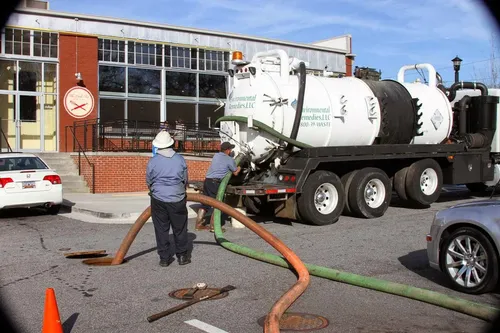
Southern Green Industries is an Atlanta-based company providing grease trap cleaning and used cooking oil recycling services throughout Atlanta, GA, and the state of Georgia. They serve a wide range of clients including restaurants, franchises, sports facilities, universities, and industrial clients. The company operates its own environmentally responsible oil recycling facility and wastewater processing plant, allowing them to manage the entire grease trap and fryer oil recycling process in-house. Established in 2007, Southern Green Industries offers flexible service options including no-contract guarantees and automatic recurring service, and they handle all regulatory paperwork on behalf of their clients.
The Landscape of Food Waste in Georgia
Georgia currently operates without a statewide landfill ban or mandatory organics diversion law for restaurants 1 2. This means the decision to compost is voluntary, driven by economic incentives, corporate sustainability targets, or local community pressure. However, state agencies recognize the value of diversion. The Georgia EPD provides resources and guidance for businesses looking to start composting programs, highlighting it as a critical tool for reducing the nearly 48% of organic waste found in the Atlanta area's municipal solid waste 3 2.
For very large operations, there are specific regulations to consider. Businesses that generate over 500 tons of food scraps per month are considered large generators and require a full solid waste handling permit from the EPD for composting or collection activities. For the vast majority of restaurants, starting a program involves navigating a landscape of service providers and local facilities rather than complex state permits.
Practical Methods for Restaurant Food Waste Diversion
Restaurants in Georgia have several pathways to manage their food scraps and other compostable materials. The right choice depends on the volume of waste, available space, budget, and local service availability.
Commercial Hauling Services The most common solution for restaurants is to partner with a commercial waste hauler that offers organics collection. Companies provide dedicated bins for food scraps, which are then collected on a scheduled basis-often alongside traditional trash and recycling pickups. This service transports the organic waste to a permitted composting facility. For restaurants, this method requires minimal operational change beyond staff training on what to separate and is widely available in urban and suburban areas.
On-Site Composting For restaurants with appropriate outdoor space, such as a secure alley or back lot, on-site composting is a viable option. This involves managing the decomposition process yourself using designated collection bins in the kitchen and larger compost tumblers or piles outside. Suitable materials include fruit and vegetable scraps, coffee grounds, uncoated paper, and certain compostable serviceware. The Georgia Restaurant Association notes that this approach keeps the nutrient cycle local and can significantly reduce the volume of trash sent for disposal. It requires more hands-on management to maintain proper moisture and aeration but eliminates hauling fees for organics.
Partnering with Local Composting Facilities Some areas have local municipal or private composting facilities that accept food waste directly. A prime example is the Athens-Clarke County compost center, which processes community food waste and sells the finished compost 4. Restaurants can arrange for drop-off or, in some cases, direct pickup. This model is often seen in communities with strong local sustainability initiatives and can be a cost-effective solution, especially if a restaurant is located near the facility.
Find the perfect composting & food waste companies for your needs
Get personalized recommendations and expert advice
Understanding Costs and Potential Savings
Implementing a food waste diversion program involves both costs and potential financial benefits. A clear understanding of both sides is essential for building a business case.
Initial and Ongoing Costs Start-up costs typically include purchasing dedicated collection bins for the kitchen and back-of-house. The most significant recurring cost is the service fee charged by a commercial hauler for organics collection, which is in addition to existing trash service fees. There may also be tipping fees if you deliver waste directly to a composting facility 5. However, a key financial dynamic is the potential for cost avoidance. By diverting heavy, wet food waste from the trash stream, restaurants can often reduce the size or frequency of their garbage dumpster service, leading to lower trash hauling costs that can partially or fully offset the new composting service fee 5.
Revenue and Value Opportunities Beyond simple cost reduction, composting can create new value. Finished compost is a marketable product. Facilities like the one in Athens-Clarke County sell compost commercially, and while individual restaurants may not sell large volumes, they can use the compost for landscaping or offer it to community gardens, enhancing their local brand 6 7. The Athens facility itself, with a $1.5 million setup cost, generates revenue by selling compost at around $20 per cubic yard for commercial use 6. For a restaurant, the primary "revenue" may be in the form of marketing appeal, customer goodwill, and alignment with environmental values that are increasingly important to patrons.
Steps to Start a Composting Program
Beginning a food waste diversion initiative doesn't have to be overwhelming. A structured, step-by-step approach can lead to a successful implementation.
- Conduct a Waste Audit: Before contacting vendors, track your current waste for a week. Identify how much food waste you generate, what types (pre-consumer vs. post-consumer), and when it's produced. This data is crucial for determining the scale of service you need and forecasting potential cost savings from reduced trash hauling.
- Research Local Service Providers: Contact commercial waste haulers that service your area to request quotes for organics collection. Companies like Waste Management and regional providers offer these services. Ask about bin sizes, pickup frequency, and contract terms.
- Consult State Resources: Explore the guidance and resources provided by the Georgia Environmental Protection Division. Their "Food Residuals Diversion" page offers information on best practices and regulatory considerations for businesses 8.
- Evaluate On-Site Potential: Assess if you have the secure outdoor space and staff capacity to manage an on-site composting system. This can be a low-cost entry point, especially for restaurants with gardens or a strong desire to handle waste internally 9 10.
- Train Your Staff: The success of any program hinges on consistent participation. Develop clear, simple guidelines for what is compostable, label bins prominently, and train all team members. Ongoing communication is key to maintaining proper separation.
Frequently asked questions
Sources
Footnotes
-
Georgia Food Waste Policy Gap Analysis and Inventory (PDF) - https://www.nrdc.org/sites/default/files/ga-food-waste-policy-gap-report.pdf ↩
-
Georgia Food Waste Policy - https://policyfinder.refed.org/georgia/ ↩ ↩2
-
Food Residuals Diversion | Environmental Protection Division - https://epd.georgia.gov/food-residuals-diversion ↩
-
Restaurant Waste Guide 2025 - https://www.wastemanaged.co.uk/our-news/restaurant/restaurant-waste-guide/ ↩
-
Atlanta Commercial Composting Compliance: Essential Pickup ... - https://www.myshyft.com/blog/commercial-composting-pickup-service-contracts-atlanta-georgia/ ↩ ↩2
-
Food Waste & Composting in Georgia - https://scienceforgeorgia.org/knowledge-base1/food-waste-composting-in-georgia/ ↩ ↩2
-
Organic Waste Bans And Recycling Laws To Tackle Food Waste - https://www.biocycle.net/organic-waste-bans-recycling-laws-tackle-food-waste/ ↩
-
Composting - Environmental Protection Division - Georgia.gov - https://epd.georgia.gov/about-us/land-protection-branch/recovered-materials-and-abatement/recovered-materials/composting ↩
-
Composting in Restaurants to Keep Food Out of Landfills - https://www.garestaurants.org/news/composting-in-restaurants-to-keep-food-out-of-landfills ↩
-
How do Restaurants Dispose of Waste? A Comprehensive Guide - https://affordablewastemanagement.co.uk/how-do-restaurants-dispose-of-waste-a-comprehensive-guide/ ↩