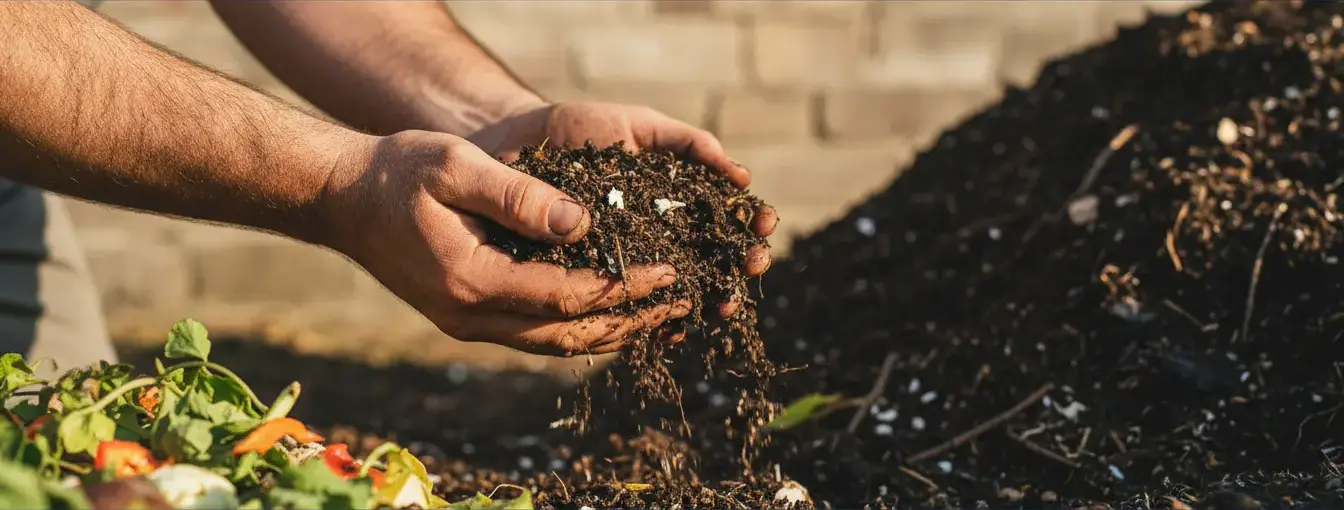
Find the Best Composting & Food Waste Companies for Your Business
No obligation • Fast responses • Nationwide coverage

Why you can trust Restaurant Waste Disposal
Restaurant Waste Disposal is a leading U.S. resource for comparing restaurant composting, food-waste recycling, grease trap cleaning, and used cooking oil collection services. Our editorial team researches providers, checks credentials, and organizes unbiased information so operators can make informed decisions. Companies cannot pay to change ratings or placement.
Search providers near you
Top Composting & Food Waste Companies in West Sacramento, California Ranked
For restaurant owners and managers in West Sacramento, managing food scraps and organic waste is no longer just a matter of sustainability-it's the law. California's SB 1383 mandates that all businesses, including restaurants, arrange for weekly organics recycling service alongside their trash and traditional recycling. This statewide regulation aims to dramatically reduce greenhouse gas emissions from landfills by diverting food waste to composting or anaerobic digestion facilities. Navigating these new requirements involves understanding your service options, proper sorting protocols, and how to leverage the system for potential cost savings. This guide breaks down the essentials of commercial organics recycling specifically for the West Sacramento food service industry.
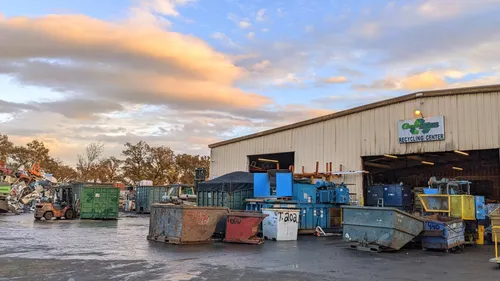
Understanding SB 1383 Compliance for Restaurants
The core of your responsibility under California law is the "three-cart system." Your establishment must have a subscription for weekly collection of three distinct waste streams: trash (gray/black cart), recyclables (blue cart), and organics (green cart). This is not optional. The organics cart is designated for food scraps, food-soiled paper, and yard trimmings. It's crucial to understand that "full-service" restaurants-where customers do not bus their own trays-are exempt from providing customer-facing organic bins. However, you are still required to have employee-only bins in kitchen and prep areas to capture food waste before it hits the trash.
If your restaurant already manages its food waste through alternative methods, you may apply for a formal exemption. This requires documentation, such as a contract with a certified recycler or weight tickets from a licensed composting facility, proving that you are diverting the required amount of organic material from the landfill 1. Self-hauling to a certified facility is another compliance pathway, but it must be formally documented 2.
Service Providers and Collection Logistics
Waste Management (WM) is a primary hauler for commercial services in West Sacramento, but you are not limited to them. You may use any third-party licensed recycler or hauler, provided they can offer the required weekly organics collection and provide you with the documentation needed to prove compliance. When setting up or reviewing your service, you'll work with your chosen provider to determine the appropriate size and number of carts for each stream based on your establishment's volume.
Collection occurs weekly, with schedules potentially shifting for major holidays like Thanksgiving, Christmas, and New Year's Day. It's your responsibility to ensure carts are accessible at the curb or in the designated service alley by 6:00 AM on your collection day. Coordination with your hauler is key to confirm your specific pickup day, cart sizes, and any service nuances for your location.
What Goes In the Green Organics Cart
Proper sorting is the most critical daily task for compliance. Contamination-placing the wrong items in the organics cart-can lead to rejection of the load and potential fines. Training every staff member is essential.
DO Compost These Items:
- All food scraps: Fruits, vegetables, meat, bones, fish, dairy, eggs, bread, pasta, and coffee grounds with filters.
- Food-soiled paper: Uncoated napkins, paper plates, pizza boxes, paper take-out containers, and paper towels.
- Yard trimmings: Leaves, grass, and small branches.
DO NOT Compost These Items:
- Plastic bags, wrap, or film (even those labeled "compostable" or "biodegradable" are often not accepted in curbside programs).
- Styrofoam (polystyrene).
- Coated paper products (like glossy magazines or wax-coated cardboard).
- Liquids, oils, or grease.
- Metal, glass, or rubber bands 3.
The Golden Rule: Keep organics loose in the green cart. Do not bag food scraps in plastic bags. If you must use a bag for collection, empty the contents into the cart and dispose of the plastic bag in the trash 4.
Find the perfect composting & food waste companies for your needs
Get personalized recommendations and expert advice
Strategies for Cost Control and Waste Reduction
Compliance doesn't have to mean higher costs; it can reveal opportunities for savings. A key strategy is "right-sizing." If you successfully divert most of your food scraps and soiled paper to the organics cart and bottles/cans to recycling, the volume of actual trash in your gray cart may decrease. Contact your hauler to discuss downsizing your trash cart to a smaller, less expensive tier 5 6. Conversely, if you need more capacity for organics or recycling, many providers allow you to order additional carts for these streams at little to no extra cost, as diverting material is the goal of the law 7.
The financial incentive is clear: reducing contamination avoids fees, and optimizing your service mix can lower your overall bill. Furthermore, efficient sorting in the back of house can streamline operations and even reduce pest issues associated with mixed waste.
Your Action Plan for Compliance
- Contact Your Hauler: If you use WM or another provider, reach out to confirm your current service levels meet the SB 1383 requirements for three-cart weekly service. Verify your cart sizes and collection schedule 8.
- Review City Resources: Visit the City of West Sacramento's official Sustainability and Solid Waste webpages for local guides, exemption forms, and updates.
- Implement Staff Training: Create simple, visual guides for your sorting stations (kitchen, dish pit, bar). Conduct regular training to ensure all employees, including new hires, understand what goes where.
- Audit and Document: Periodically check your carts for contamination. If you use a third-party service or are pursuing an exemption, meticulously maintain all contracts, invoices, and weight tickets as proof of compliance 9.
By embracing these organics recycling requirements, West Sacramento restaurants play a direct role in California's climate goals, turning what was once waste into valuable compost for local agriculture. A well-managed program is good for the environment, compliant with the law, and can be smart for your bottom line.
Frequently asked questions
Sources
Footnotes
-
Organics Recycling | City of Sacramento - https://www.cityofsacramento.gov/public-works/recycling-solid-waste/Commercialwasteservices/business-waste-requirements/organics ↩
-
Business and Multifamily Organics - https://wmr.saccounty.net/Pages/Business_and_Multifamily_Organics_FAQs.aspx ↩
-
Weekly Curbside Organics Collection - https://wmr.saccounty.net/Pages/CurbsideOrganics.aspx ↩
-
YOUR GUIDE TO CITY SERVICES - City of Sacramento - https://www.cityofsacramento.gov/content/dam/portal/pw/RSW/service-guide-2023-24/ServiceGuide_2023-2024_A.pdf ↩
-
commercial - North Area Recovery Station - Sacramento County - https://wmr.saccounty.gov/Documents/DWMR_Commercial_Compliance_Service_Guide.pdf ↩
-
SB1383 (California's Short-Lived Climate Pollutant Reduction ... - https://www.cityofwestsacramento.org/government/departments/community-development/sustainability/solid-waste/sb1383-organics-recycling ↩
-
Solid Waste and Recycling | City of West Sacramento - https://www.cityofwestsacramento.org/i-want-to/learn-about/recycling ↩
-
Business Waste Services in West Sacramento, CA - WM - https://www.wm.com/us/en/location/ca/west-sacramento/commercial-trash-service-west-sacramento-ca ↩
-
Compost | City of West Sacramento - https://www.cityofwestsacramento.org/government/departments/community-development/sustainability/solid-waste/compost-give-away ↩