
Find the Best Composting & Food Waste Companies for Your Business
No obligation • Fast responses • Nationwide coverage

Why you can trust Restaurant Waste Disposal
Restaurant Waste Disposal is a leading U.S. resource for comparing restaurant composting, food-waste recycling, grease trap cleaning, and used cooking oil collection services. Our editorial team researches providers, checks credentials, and organizes unbiased information so operators can make informed decisions. Companies cannot pay to change ratings or placement.
Search providers near you
Top Composting & Food Waste Companies in Poway, California Ranked
For restaurants and food service businesses in Poway, managing organic waste is no longer just an environmental consideration-it's a state-mandated requirement. California's SB 1383 has established strict regulations for commercial organic waste recycling, aiming to drastically reduce landfill disposal of food scraps, food-soiled paper, and yard waste. In Poway, compliance is facilitated through the city's contracted provider, EDCO Waste and Recycling Services. This system is designed to transform what was once trash into valuable compost or renewable energy, but it requires businesses to actively participate in proper sorting and collection. Understanding the rules for bins, contamination, and edible food recovery is essential for any commercial kitchen to operate smoothly, avoid fines, and contribute to California's climate goals.
Food2Soil - San Diego's Neighborhood Composter
San Diego, CA
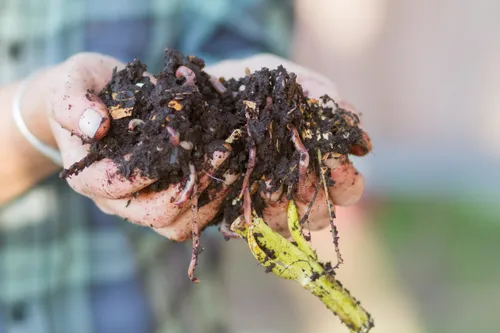
Food2Soil - San Diego's Neighborhood Composter was a local composting service focused on food waste from restaurants and residents in San Diego, CA. The business provided a community-based solution for composting food scraps, supporting waste recovery and promoting a circular economy. After 10 years of operation, Food2Soil closed its services on March 31, 2025.

Chula Vista Environmental Services
1800 Maxwell Rd, Chula Vista, CA 91911
Chula Vista Environmental Services provides waste management and sustainability programs in Chula Vista, CA. They offer used cooking oil collection and food waste composting services for restaurants and businesses. The department also manages household hazardous waste disposal, including paints, pesticides, and motor oil, at the South Bay Household Hazardous Waste Collection Facility. Additionally, they operate a Reuse Center where residents can obtain reusable products like paint and household chemicals. Free home pick-up is available for eligible disabled or elderly residents who cannot transport hazardous waste themselves.
Miramar Landfill
5180 Convoy St, San Diego, CA 92111
Miramar Landfill is the City of San Diego's only active landfill, located in San Diego, CA. It handles nearly 910,000 tons of trash annually across its 1,500-acre site. The landfill has been in operation since 1959, currently using the West Miramar area opened in 1983. It processes organic materials such as food waste and vegetative waste from restaurants and other sources, diverting them to the Miramar Greenery where they are turned into mulch, compost, and wood chips. This facility also captures methane gas produced by waste decomposition to fuel electrical generators at the Metropolitan Biosolids Center, supporting environmental sustainability efforts.
Understanding SB 1383 and Poway's Mandate
California's Short-Lived Climate Pollutants (SLCP) reduction law, known as SB 1383, sets a statewide target to reduce organic waste disposal by 75% by 2025. For cities like Poway, this translates into mandatory programs for all businesses that generate organic waste 1 2. The law recognizes that food and yard waste in landfills produces methane, a potent greenhouse gas. By diverting this material to composting or anaerobic digestion facilities, the state can significantly cut emissions. Poway's implementation, in partnership with EDCO, requires every applicable business to subscribe to and properly use organic waste collection services 3. This isn't an optional green program; it's a compliance obligation with specific container, signage, and education requirements that restaurants must follow.
Who is Required to Participate in Organic Waste Recycling?
The mandate is broad. Essentially, all businesses in Poway that generate any amount of organic waste are required to participate. This unequivocally includes:
- Restaurants, cafes, and bakeries
- Grocery stores and supermarkets
- Hotels with food service
- Catering companies
- Corporate cafeterias
- Schools and institutions with kitchens
The regulations also introduce specific tiers for Edible Food Recovery. Large generators of edible food have an additional responsibility to donate it to food recovery organizations:
- Tier 1 Generators: Businesses that generate over 2,000 pounds of edible food per week must already have established food recovery programs 4.
- Tier 2 Generators: Businesses generating between 500 and 2,000 pounds of edible food per week were required to comply with food recovery rules by 2024.
Even if your restaurant does not fall into these tiers, you are still required to separate all food scraps and food-soiled paper into the organics stream.
The Three-Stream System: What Goes in Each Bin?
Successful compliance hinges on proper sorting. Poway and EDCO utilize a three-container system with specific color-coding and accepted materials.
Green Bin (Organics/Wet Waste)
This bin is for all compostable material. It will be processed into soil amendments or renewable energy.
- Accepted: All food scraps (fruits, vegetables, meat, bones, dairy, bread, coffee grounds/filters), food-soiled paper (napkins, paper towels, uncoated paper plates, pizza boxes), yard waste, plants, flowers, and pumpkins.
- Strictly Prohibited: Plastic bags of any kind, including those labeled "compostable" or "biodegradable." This is a major source of contamination. Also, no glass, metal, plastic, or hazardous waste.
Blue Bin (Recycling/Dry Waste)
This bin is for clean, dry recyclables.
- Accepted: Empty bottles, cans, glass jars, clean cardboard, office paper, newspapers, and magazines.
- Prohibited: Food-contaminated containers (e.g., a greasy pizza box goes in green), plastic bags, and Styrofoam.
Gray/Black Bin (Trash/Landfill)
This bin is for everything that cannot go in the green or blue bins.
- Accepted: Non-recyclable plastics, Styrofoam, ceramics, broken glass, and any material contaminated with food waste that cannot be easily separated.
- Goal: With proper sorting, this bin should be the smallest.
Container Setup, Signage, and Education Requirements
Simply having the bins isn't enough. The law requires businesses to make proper sorting easy and obvious for both employees and customers.
- Container Colors: You must use the standard color-coded bins: green for organics, blue for recycling, and gray or black for trash 5.
- Labels: All containers, both indoor and outdoor, must have clear, graphic labels showing what materials belong in each bin. EDCO can provide compliant signage 6.
- Employee & Customer Education: Businesses are legally required to educate employees, tenants, and even customers about how to properly sort waste into the correct streams. This means training kitchen and front-of-house staff during onboarding and providing clear signage in customer areas.
Find the perfect composting & food waste companies for your needs
Get personalized recommendations and expert advice
Collection Schedule and Service Setup
Organic waste collection in Poway is provided weekly by EDCO Waste and Recycling Services, the city's exclusive franchised hauler. Schedules are customized based on your business's location, volume, and needs. If you are a new business or need to adjust your current service, you must contact EDCO directly to set up or modify your commercial waste service agreement. They will provide the appropriate number and size of green, blue, and gray containers and inform you of your specific pickup day.
The Critical Issue of Contamination
Contamination-placing the wrong item in a bin-undermines the entire recycling and composting process. For organics recycling, the most common and problematic contaminant is plastic bags in the green bin. Even bags marketed as compostable are not accepted in Poway's program because they do not break down quickly enough in local processing facilities 7 8.
Businesses have a duty to periodically inspect their bins for contamination and re-educate staff if mistakes are found 9. High levels of contamination can lead to:
- Rejection of the entire load by the processing facility.
- Financial penalties or fines from the hauler or city.
- Increased service costs due to the need for additional processing or disposal.
Understanding the Costs of Service
The cost for organic waste collection is integrated into your overall commercial waste service bill from EDCO. There is not typically a separate line item for "composting." Your monthly fee is based on the size and number of containers you need and the frequency of pickup 10 11. EDCO offers customized plans designed to provide service at a reasonable monthly cost 12. An effective strategy to manage costs is to maximize use of the green (organics) and blue (recycling) streams, which can allow you to downsize your more expensive gray trash bin, potentially leading to overall savings.
Steps to Take for Compliance
- Assess Your Waste Streams: Conduct a brief waste audit to understand the volume of organics, recycling, and trash your restaurant produces.
- Contact EDCO: Reach out to EDCO Waste and Recycling Services to confirm your service details, order the correct color-coded bins, and obtain the required signage.
- Train Your Team: Educate every employee, from dishwashers to managers, on the sorting rules. Make it part of your standard operating procedures.
- Implement Clear Signage: Place easy-to-understand labels on every bin, in both kitchen and customer-facing areas.
- Monitor and Adjust: Regularly check bins for contamination and provide refresher training as needed. Review your service levels with EDCO periodically to ensure they match your actual waste generation.
Frequently asked questions
Sources
Footnotes
-
Mandatory Commercial Recycling | Poway, CA - Official Website - https://poway.org/874/Mandatory-Commercial-Recycling ↩
-
Organic Waste Reduction (SB 1383) | Poway, CA - Official Website - https://poway.org/1039/Organic-Waste-Reduction-SB-1383 ↩
-
Trash, Recycling & Organics Recycling Collection | Poway, CA - https://poway.org/298/Trash-Recycling-Collection ↩
-
Chapter 6.06 STATE MANDATED MUNICIPAL SOLID WASTE ... - https://www.codepublishing.com/CA/NewportBeach/html/NewportBeach06/NewportBeach0606.html ↩
-
Collection Systems, Container Colors, and Labeling - CalRecycle - https://calrecycle.ca.gov/organics/slcp/collection/systems/ ↩
-
SB1383 Business Requirements - Public Works - City of Burbank - https://www.burbankca.gov/web/public-works/sb1383-business-requirements ↩
-
Statewide Mandatory Organic Waste Collection - CalRecycle - https://calrecycle.ca.gov/organics/slcp/collection/ ↩
-
What Goes Where | Poway, CA - Official Website - https://poway.org/310/What-Goes-Where ↩
-
Chapter 13.10 SOLID WASTE MANAGEMENT - General Code - https://www.codepublishing.com/CA/PleasantHill/html/PleasantHill13/PleasantHill1310.html ↩
-
Item 9 - Ord Amending the PMC Regarding Solid Waste ... - https://docs.poway.org/WebLink/DocView.aspx?id=164258&dbid=0&repo=CityofPoway ↩
-
Food Scrap Recycling Program FAQs - https://www.cityofmissionviejo.org/departments/public-works/food-scrap-recycling-program-faqs ↩
-
Commercial and Multi-Family Recycling Compliance Requirements - https://www.edcodisposal.com/wp-content/uploads/2021/08/Buena-Park-Recy-Bundle-Roll-Out-Mailer-Final.pdf ↩