Find the Best Used Cooking Oil Collection Companies for Your Business
No obligation • Fast responses • Nationwide coverage

Why you can trust Restaurant Waste Disposal
Restaurant Waste Disposal is a leading U.S. resource for comparing restaurant composting, food-waste recycling, grease trap cleaning, and used cooking oil collection services. Our editorial team researches providers, checks credentials, and organizes unbiased information so operators can make informed decisions. Companies cannot pay to change ratings or placement.
Search providers near you
Top Used Cooking Oil Collection Companies in Paterson, New Jersey Ranked
For restaurants and food service businesses in Paterson, managing used cooking oil (UCO) is more than just a routine cleanup task-it's a regulated operational necessity with significant environmental and financial implications. Proper grease collection and recycling are mandated by New Jersey state law and local plumbing codes, designed to protect the city's sewer infrastructure and waterways from harmful blockages and pollution. By partnering with a licensed collection service, establishments can transform a waste product into a valuable commodity, ensuring compliance, avoiding hefty fines, and potentially creating a new revenue stream. This guide outlines the essential regulations, processes, and local providers for effective used oil management in the Silk City.
Loeffels Waste Oil Services
43 Layton Ln, Sparta, NJ 07871
Loeffels Waste Oil Services is a family-owned company based near New York, NY, specializing in used cooking oil collection and grease trap cleaning. They serve commercial clients with reliable waste oil removal and grease trap maintenance, including emergency pump-out services. With over ninety years of experience, Loeffels Waste Oil Services emphasizes safety and efficiency in their operations.
Green Oil Recycling
317 Liberty Ave, Brooklyn, NY 11207
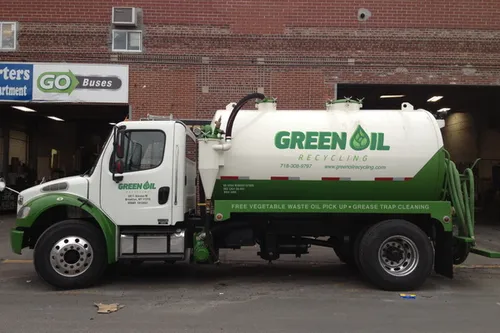
Green Oil Recycling provides professional grease trap cleaning and used cooking oil collection services in New York, NY. They specialize in maintaining commercial kitchen grease traps, including passive hydro mechanical, large pre-cast concrete gravity traps, and auto-grease removal systems like Big Dipper. Their trained technicians thoroughly clean traps, scrape walls, and use bio-safe chemicals to break down waste oil, helping kitchens stay odorless and compliant with local regulations. Green Oil Recycling serves New York City, New Jersey, and Nassau County, ensuring all waste oil disposal meets BIC, DEC, and EPA standards. They also inspect gaskets and fittings to prevent violations and hazards, working closely with Done Right Hood & Fire Safety for comprehensive grease trap and kitchen exhaust maintenance.

New York Hood Cleaning
New York, NY
New York Hood Cleaning provides grease trap cleaning and used cooking oil collection services in New York, NY. They specialize in thorough cleaning of kitchen ducts, fans, hoods, and vents to maintain commercial kitchen operations. The company emphasizes sustainability by recycling used cooking oil for animal feed or fuel. With decades of experience, they offer skilled service using specialized tools to remove grease effectively. Their approach simplifies operations by combining multiple services under one provider, supported by responsive customer service.

NYC Clean Air Group
154-05 12th Ave, Beechhurst, NY 11357
NYC Clean Air Group is a family-owned business serving New York, NY, and New Jersey. They specialize in used cooking oil collection, grease trap cleaning, and cesspool maintenance for restaurants, stadiums, hospitals, and commissaries across all five boroughs. The company offers licensed and insured services with options for monthly contracts or per-incident work. They emphasize environmentally friendly practices and provide same-day service and free estimates.
Grease Sharks
New York, NY
Grease Sharks is a grease trap cleaning and used cooking oil collection company based in New York, NY. They serve the Greater New York City area, including New Jersey, Westchester, and Connecticut. Their services include grease trap cleaning and maintenance, used cooking oil pick up, grease trap installation and plumbing, sewer and line jetting, and drain cleaning. With over a decade of combined experience, Grease Sharks aims to help businesses stay compliant and running smoothly. They provide scheduled maintenance tailored to client needs and offer 24/7 emergency service throughout the year.
Understanding New Jersey's Grease Recycling Regulations
Navigating the legal landscape is the first step for any Paterson restaurant. The New Jersey Department of Environmental Protection (NJDEP) enforces strict rules on the transportation and recycling of used fryer oil to ensure it is handled responsibly from your kitchen to its final destination as biodiesel or another recycled product.
Key State Requirements:
- Licensed Haulers Only: It is illegal for an unregistered entity to transport used cooking oil. Legitimate haulers must display a valid NJDEP decal on their collection vehicles.
- Mandatory Manifests: A uniform manifest, or chain-of-custody form, is required for every single pickup. This document details the quantity collected, the hauler's information, and the recycling facility destination. The restaurant must keep a copy for its records to prove proper disposal.
- Secure Storage: Oil must be stored in dedicated, lockable containers (typically between 35 and 240 gallons) provided by your collection company. This prevents theft, contamination, and spills 1.
- Grease Trap Maintenance: Separate from oil collection, your kitchen's grease interceptor must be maintained to prevent sewer clogs. Best practices include ensuring solids do not exceed 25% of capacity and having traps pumped at least every 90 days, as per local plumbing codes 2 3.
The Cost of Non-Compliance: Pouring oil down drains is a direct violation that can lead to severe sewer backups, environmental damage, and substantial fines from the city. Using an unlicensed hauler or failing to maintain manifests puts your business at risk of state penalties and eliminates the audit trail required by law.
The Step-by-Step Collection and Recycling Process
Implementing a compliant used cooking oil program is straightforward when you understand the workflow from collection to rebirth as renewable fuel.
- Safe Storage On-Site: After cooking oil has cooled, staff should carefully pour it from fryers into a dedicated, lidded collection container. These containers are almost always provided for free by your service provider and are designed to be leak-proof and secure with a locking mechanism to deter unauthorized access.
- Scheduled Pickup: Based on your volume, your licensed hauler will establish a regular pickup schedule-weekly, bi-weekly, or monthly. On collection day, a service technician will pump the oil from your storage container into their specialized truck.
- Documentation and Chain of Custody: At the time of pickup, the driver will complete the state-required manifest. You should receive a copy for your files. This critical step formalizes the transfer of liability and provides proof of responsible recycling 4.
- Transformation into Biofuel: The collected oil is transported to a processing facility. There, it undergoes filtration to remove food particles and water. The purified oil is then converted into biodiesel, a cleaner-burning renewable diesel substitute, or other industrial products, completing the recycling loop 5.
Find the perfect used cooking oil collection companies for your needs
Get personalized recommendations and expert advice
Financial Considerations: Cost vs. Potential Revenue
A major advantage of professional used cooking oil recycling is that it often comes at little to no direct cost to the restaurant, and can even become a source of income.
- Typical Service Structure: Most reputable collection companies provide their services-including the storage container, regular pickups, and compliance paperwork-for free. Their business model is based on the value of the recycled commodity.
- Earning from Clean Oil: If your oil is well-maintained and free of excessive food debris and water, you may qualify for a revenue-sharing program. Prices can fluctuate with the commodities market, but restaurants can potentially earn between $2.40 to $3.60 per gallon for high-quality, uncontaminated used cooking oil 6 7.
- Fees for Contaminated Oil: Conversely, oil that is heavily contaminated with water, solids, or other liquids is more expensive to process. In such cases, a hauler may charge a disposal fee instead of providing a payout. This underscores the importance of proper on-site handling and storage to maintain oil quality.
Choosing a Service Provider in the Paterson Area
Selecting the right partner is crucial for seamless operations. Look for a provider that is fully licensed, transparent about their process, and offers comprehensive support for New Jersey's documentation requirements. Several established companies service the Paterson and broader North Jersey region:
- Grease Connections: Emphasizes compliance support, providing locked containers and managing the required state manifests for businesses 8.
- D&W Alternative Energy: Offers collection services and provides educational resources for restaurants on how to manage and sell their used oil effectively 9.
- Eazy Grease: Highlights its recycling process, turning collected oil into biodiesel and other green energy products within New Jersey 10.
- Grease Pros Recycling: Discusses the operational benefits of scheduled pickup services versus drop-off options for restaurant efficiency 11.
When evaluating providers, confirm their NJDEP licensing, understand their fee or payment structure, and ensure they handle all manifest documentation. A reliable partner turns a complex regulatory duty into a simple, automated part of your back-of-house operations.
Best Practices for Restaurant Kitchen Management
Beyond selecting a hauler, internal practices determine the success of your program.
- Train Your Staff: Ensure every team member knows to pour cooled oil only into the designated collection bin-never into sinks, floor drains, or trash cans.
- Prevent Contamination: Keep container lids closed and locked when not in use. Avoid introducing water, soap, or solid waste into the oil, as this severely degrades its value.
- Maintain Records: File every manifest receipt in an organized, accessible manner. This paperwork is your first line of defense in any compliance audit.
- Coordinate Grease Trap Service: While a different service, grease trap pumping is a related necessity. Schedule regular maintenance to prevent overflows and costly plumbing emergencies.
By integrating these practices, Paterson restaurants not only adhere to the law but also contribute to a circular economy, reducing waste and supporting the production of renewable energy right here in New Jersey.
Frequently asked questions
Sources
Footnotes
-
How to Dispose of Cooking Oil in New Jersey 2025 Complete Guide - https://greaseconnections.com/nj-cooking-oil-disposal-guide/ ↩
-
Paterson Used Cooking Oil Recycling & Grease Disposal Pickup - https://greaseconnections.com/locations/nj/passaic/paterson/ ↩
-
Fat, Oil & Grease | Livingston Township, NJ - https://www.livingstonnj.org/341/Fat-Oil-Grease ↩
-
Bill S3437 - NJ Legislature - https://www.njleg.state.nj.us/bill-search/2022/S3437/bill-text?f=S3500&n=3437_I1 ↩
-
Recycling Used Cooking Oil With Green Grease Environmental - https://www.youtube.com/watch?v=KP05Yx-GkHk ↩
-
Used Cooking Oil Pricing & Business Guide - Grease Connections - https://greaseconnections.com/used-cooking-oil-pricing-guide/ ↩
-
How to Sell Your Used Cooking Oil: A Practical Guide for New ... - https://dandwalternativeenergy.com/blog/selling-used-cooking-oil/ ↩
-
NJ Franchise Grease Recycling & SOPs 2025 - https://greaseconnections.com/nj-franchise-grease-recycling-sop/ ↩
-
Used Cooking Oil Collection & Recycling - D&W Alternative Energy - https://dandwalternativeenergy.com/used-cooking-oil-collection/ ↩
-
Used Cooking Oil Recycling Service in New Jersey - https://eazygrease.com/used-cooking-oil-recycling-new-jersey/ ↩
-
Used Cooking Oil Pickup vs Drop-Off-What's Best for Restaurants? - https://www.greaseprosrecycling.com/used-cooking-oil-pickup-vs-drop-off/ ↩