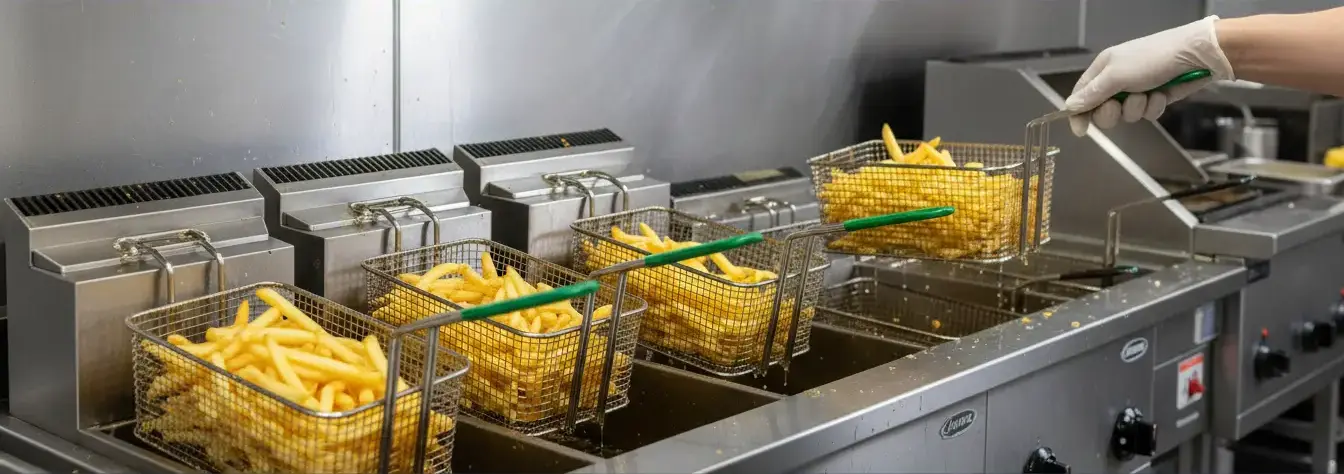
Find the Best Used Cooking Oil Collection Companies for Your Business
No obligation • Fast responses • Nationwide coverage

Why you can trust Restaurant Waste Disposal
Restaurant Waste Disposal is a leading U.S. resource for comparing restaurant composting, food-waste recycling, grease trap cleaning, and used cooking oil collection services. Our editorial team researches providers, checks credentials, and organizes unbiased information so operators can make informed decisions. Companies cannot pay to change ratings or placement.
Search providers near you
Top Used Cooking Oil Collection Companies in Newark, New Jersey Ranked
For restaurants and food service businesses in Newark, managing used cooking oil (UCO) is a critical operational and environmental responsibility. Proper collection and recycling of this material are not just about cleanliness; they are tightly regulated by the state to protect local infrastructure and public health. Partnering with a licensed hauler ensures your establishment stays compliant with New Jersey Department of Environmental Protection (NJDEP) rules, avoids costly fines, and contributes to a circular economy by turning waste into resources like biodiesel. This process involves secure containerization, scheduled pickups, and detailed tracking, often integrated with essential services like grease trap maintenance to provide a complete solution for fats, oils, and grease (FOG) management.
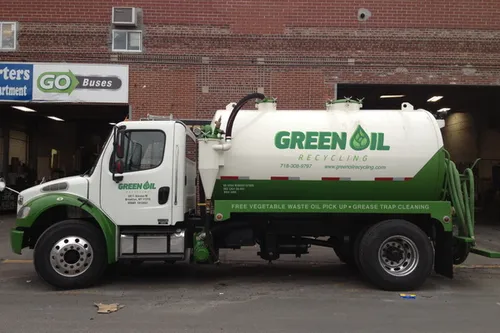
Green Oil Recycling
317 Liberty Ave, Brooklyn, NY 11207
Green Oil Recycling provides professional grease trap cleaning and used cooking oil collection services in New York, NY. They specialize in maintaining commercial kitchen grease traps, including passive hydro mechanical, large pre-cast concrete gravity traps, and auto-grease removal systems like Big Dipper. Their trained technicians thoroughly clean traps, scrape walls, and use bio-safe chemicals to break down waste oil, helping kitchens stay odorless and compliant with local regulations. Green Oil Recycling serves New York City, New Jersey, and Nassau County, ensuring all waste oil disposal meets BIC, DEC, and EPA standards. They also inspect gaskets and fittings to prevent violations and hazards, working closely with Done Right Hood & Fire Safety for comprehensive grease trap and kitchen exhaust maintenance.
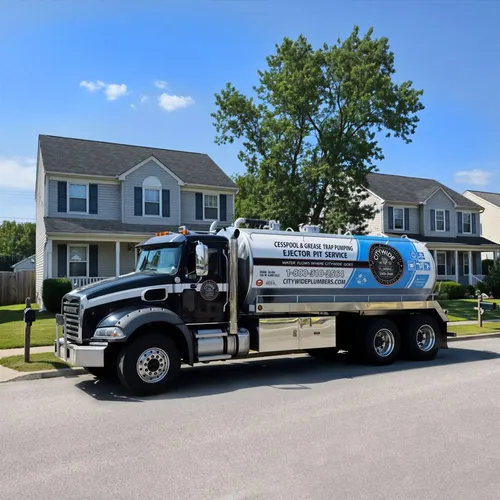
Citywide Grease Trap Maintenance | Cesspool Pumping Service Long Island
110 Voice Rd, Carle Place, NY 11514
Citywide Grease Trap Maintenance | Cesspool Pumping Service Long Island provides comprehensive sewer, drain, cesspool, and grease trap services in New York, NY. Serving both residential and commercial clients in Long Island and the New York Metropolitan area, they offer pumping, cleaning, repairs, and new installations for cesspools and septic systems. Their skilled technicians use state-of-the-art equipment to ensure efficient service. With over 65 years of experience, Citywide also provides 24/7 emergency service to address urgent plumbing needs promptly.

New York Hood Cleaning
New York, NY
New York Hood Cleaning provides grease trap cleaning and used cooking oil collection services in New York, NY. They specialize in thorough cleaning of kitchen ducts, fans, hoods, and vents to maintain commercial kitchen operations. The company emphasizes sustainability by recycling used cooking oil for animal feed or fuel. With decades of experience, they offer skilled service using specialized tools to remove grease effectively. Their approach simplifies operations by combining multiple services under one provider, supported by responsive customer service.
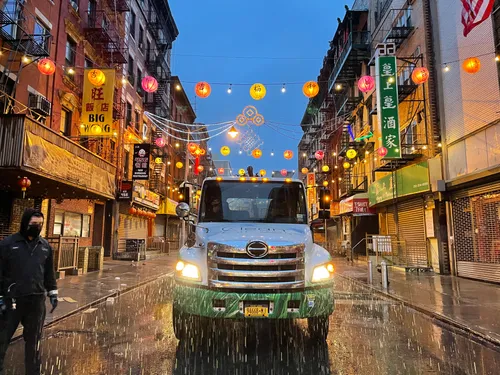
NYC Clean Air Group
154-05 12th Ave, Beechhurst, NY 11357
NYC Clean Air Group is a family-owned business serving New York, NY, and New Jersey. They specialize in used cooking oil collection, grease trap cleaning, and cesspool maintenance for restaurants, stadiums, hospitals, and commissaries across all five boroughs. The company offers licensed and insured services with options for monthly contracts or per-incident work. They emphasize environmentally friendly practices and provide same-day service and free estimates.
Grease Connections
150 Commerce Rd, Carlstadt, NJ 07072
Grease Connections is a used cooking oil collection company serving New York, NY, as well as Florida, Georgia, and New Jersey. They specialize in collecting used cooking oil from restaurants and industrial kitchens, which is then filtered, refined, and shipped to U.S. processors to create biodiesel and renewable aviation fuel. The company provides licensed, spill-free pickups with digital manifests and offers optional RFID-enabled containers for real-time tracking. Grease Connections complies with EPA regulations and state-specific requirements, ensuring proper documentation for audits and inspections. Their service helps clients reduce emissions and avoid fines related to improper grease disposal.
Understanding New Jersey's Regulatory Landscape
In New Jersey, used cooking oil is not considered mere trash; it is classified as a Class D recyclable material. This designation brings it under specific state oversight, requiring that any transportation of UCO be handled by a licensed hauler registered with the NJDEP. These haulers must display official decals on their vehicles, and every transfer of oil from your facility to the hauler must be documented using a uniform manifest. This tracking system, from generator to recycler, is a cornerstone of compliance, ensuring the oil is properly accounted for and does not end up in landfills or, worse, the sewer system 1.
The regulations extend beyond the oil itself to the broader management of kitchen grease. Newark restaurants are required to maintain fully functional grease traps or interceptors. These devices are the first line of defense in preventing FOG from entering the public sewer lines. To that end, local ordinances and sewer authorities enforce limits on FOG concentration in wastewater effluent, often mandating levels below 70 mg/L 2. Perhaps the most critical rule for every kitchen employee to know is that pouring used cooking oil down the drain is illegal. This act can lead to sewer blockages, environmental harm, and significant nuisance citations or fines for the business.
The Step-by-Step Collection and Recycling Process
A professional used cooking oil collection service manages a clear, multi-step process that keeps your kitchen running smoothly and within the law.
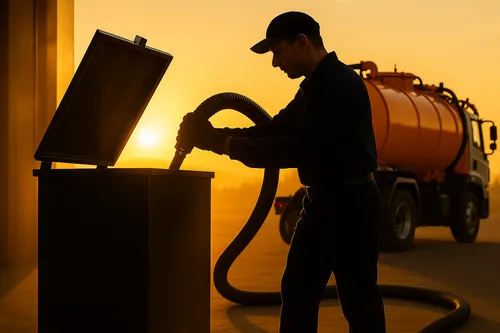
- Containerization: After cooking oil has cooled, it should be filtered (if possible) and transferred into a dedicated collection container. Licensed service providers typically supply these containers for free. They are designed to be secure, often featuring locking mechanisms to prevent spills, contamination, or theft. Containers can be placed indoors or in a designated outdoor area for easy access.
- Scheduling & Pickup: Haulers work with you to establish a regular pickup schedule based on your oil production volume. A significant benefit for busy Newark restaurants is the availability of overnight or very early morning collection windows (e.g., 1-4 AM). This schedule minimizes disruption to your daily operations and ensures the oil is removed before it becomes a storage or pest issue.
- Hauling & Manifesting: On the scheduled day, a driver from the licensed hauler will collect the full container and replace it with a clean, empty one. At this point, a crucial compliance step occurs: the completion of a NJDEP manifest. This document records the quantity of oil collected and is signed by both you and the hauler, creating a legal chain of custody.
- Recycling & Repurposing: The collected oil is transported to a processing facility where it is cleaned and converted into valuable products. The primary end product is biodiesel, a renewable fuel. Other uses include animal feed supplements and industrial lubricants. This recycling loop ensures the oil is diverted from waste streams and given a productive second life 3 4.
Key Services and Benefits for Newark Restaurants
When you engage a professional for waste oil pickup, you're often accessing a suite of related services designed to simplify facility management.
- Comprehensive Grease Management: Many providers bundle used cooking oil collection with grease trap cleaning and maintenance. Since both are essential for FOG compliance, managing them through a single provider ensures consistency, simplifies scheduling, and often provides better value. Regular grease trap servicing is vital to maintain its efficiency and keep your effluent within legal limits.
- Equipment and Security: Providers commonly supply all necessary collection equipment-barrels, drums, or larger outdoor containers-at no upfront cost. These containers are built to be durable and secure, mitigating the risk of used grease theft, which can be a concern in urban areas 5.
- Flexible and Unobtrusive Service: Understanding the fast-paced environment of a commercial kitchen, reputable haulers offer flexible pickup times. The option for pre-dawn collection is a standout feature for Newark businesses, allowing the exchange to happen quietly and efficiently without interfering with lunch prep, dinner service, or customer parking.
Find the perfect used cooking oil collection companies for your needs
Get personalized recommendations and expert advice
Understanding Costs and Potential Value
The financial model for used cooking oil recycling can vary. Some service providers charge a fee for collection and recycling, which is often offset by the savings from avoiding potential fines and sewer surcharges. The cost typically depends on your volume, pickup frequency, and any additional services like grease trap cleaning.
Interestingly, other business models exist where the service itself is offered with no fees or long-term contracts. In these cases, the recycling company covers its costs through the value of the processed oil (e.g., biodiesel feedstock). Some providers may even offer rebate programs based on the volume or market value of the oil you generate 6 7. Tools like ROI calculators are available to help restaurant owners estimate potential savings or rebates from their recycling efforts, factoring in avoided disposal costs and other benefits 8.
Choosing a Provider in Newark
When selecting a partner for grease recycling and oil collection in Newark, verification is key. Always confirm that the hauler is licensed by the NJDEP to transport Class D recyclables. Established providers serving the Newark and Essex County area, such as Grand Natural Inc. and Grease Connections, understand the local regulatory environment and infrastructure needs 9 10. Look for a provider that offers clear communication, reliable scheduling, transparent documentation (like digital manifest storage), and a full range of services to meet all your FOG compliance needs efficiently.
Frequently asked questions
Sources
Footnotes
-
NJ Franchise Grease Recycling & SOPs 2025 - https://greaseconnections.com/nj-franchise-grease-recycling-sop/ ↩
-
S2166 - NJ Legislature - https://pub.njleg.gov/bills/2014/S2500/2166_I1.HTM ↩
-
How to Dispose of Cooking Oil in New Jersey 2025 Complete Guide - https://greaseconnections.com/nj-cooking-oil-disposal-guide/ ↩
-
Recycling Used Cooking Oil With Green Grease Environmental - https://www.youtube.com/watch?v=KP05Yx-GkHk ↩
-
Used Cooking Oil Collection Newark - https://www.grandnaturalinc.com/locations/used-cooking-oil-recycling-in-newark.html ↩
-
Used Cooking Oil Recycling Service in New Jersey - https://eazygrease.com/used-cooking-oil-recycling-new-jersey/ ↩
-
Used Cooking Oil Recycling Service in New Jersey - https://eazygrease.com/used-cooking-oil-recycling-new-jersey/ ↩
-
NJ Oil Recycling ROI Calculator | Grease Savings Tool - https://greaseconnections.com/nj-oil-recycling-roi-calculator/ ↩
-
Used Cooking-Oil Recycling & Grease Pickup | Newark NJ - https://greaseconnections.com/locations/nj/essex/newark-ironbound/ ↩
-
Cooking-Oil Recycling & Grease Pickup | Essex County NJ - https://greaseconnections.com/locations/nj/essex/ ↩