
Find the Best Used Cooking Oil Collection Companies for Your Business
No obligation • Fast responses • Nationwide coverage

Why you can trust Restaurant Waste Disposal
Restaurant Waste Disposal is a leading U.S. resource for comparing restaurant composting, food-waste recycling, grease trap cleaning, and used cooking oil collection services. Our editorial team researches providers, checks credentials, and organizes unbiased information so operators can make informed decisions. Companies cannot pay to change ratings or placement.
Search providers near you
Top Used Cooking Oil Collection Companies in Linden, New Jersey Ranked
For restaurants and food service establishments in Linden, managing used cooking oil (UCO) is not just a matter of cleanliness-it's a legal requirement with potential financial benefits. Local and state regulations mandate the proper recycling of grease and oil, turning a waste product into a valuable commodity like biodiesel. By partnering with a licensed hauler, Linden businesses can ensure compliance, streamline their waste management, and often turn a cost center into a source of revenue through rebate programs.
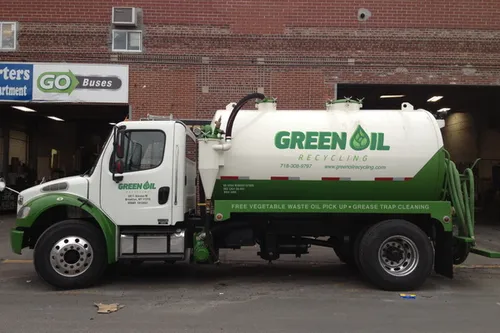
Green Oil Recycling
317 Liberty Ave, Brooklyn, NY 11207
Green Oil Recycling provides professional grease trap cleaning and used cooking oil collection services in New York, NY. They specialize in maintaining commercial kitchen grease traps, including passive hydro mechanical, large pre-cast concrete gravity traps, and auto-grease removal systems like Big Dipper. Their trained technicians thoroughly clean traps, scrape walls, and use bio-safe chemicals to break down waste oil, helping kitchens stay odorless and compliant with local regulations. Green Oil Recycling serves New York City, New Jersey, and Nassau County, ensuring all waste oil disposal meets BIC, DEC, and EPA standards. They also inspect gaskets and fittings to prevent violations and hazards, working closely with Done Right Hood & Fire Safety for comprehensive grease trap and kitchen exhaust maintenance.

New York Hood Cleaning
New York, NY
New York Hood Cleaning provides grease trap cleaning and used cooking oil collection services in New York, NY. They specialize in thorough cleaning of kitchen ducts, fans, hoods, and vents to maintain commercial kitchen operations. The company emphasizes sustainability by recycling used cooking oil for animal feed or fuel. With decades of experience, they offer skilled service using specialized tools to remove grease effectively. Their approach simplifies operations by combining multiple services under one provider, supported by responsive customer service.
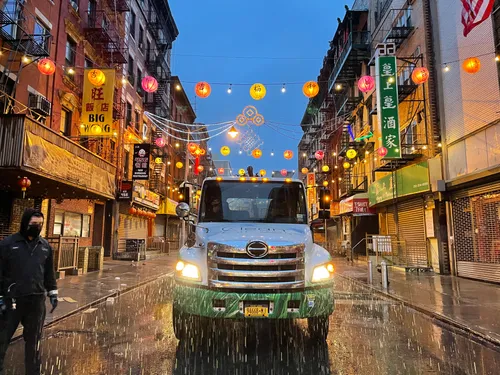
NYC Clean Air Group
154-05 12th Ave, Beechhurst, NY 11357
NYC Clean Air Group is a family-owned business serving New York, NY, and New Jersey. They specialize in used cooking oil collection, grease trap cleaning, and cesspool maintenance for restaurants, stadiums, hospitals, and commissaries across all five boroughs. The company offers licensed and insured services with options for monthly contracts or per-incident work. They emphasize environmentally friendly practices and provide same-day service and free estimates.
Grease Sharks
New York, NY
Grease Sharks is a grease trap cleaning and used cooking oil collection company based in New York, NY. They serve the Greater New York City area, including New Jersey, Westchester, and Connecticut. Their services include grease trap cleaning and maintenance, used cooking oil pick up, grease trap installation and plumbing, sewer and line jetting, and drain cleaning. With over a decade of combined experience, Grease Sharks aims to help businesses stay compliant and running smoothly. They provide scheduled maintenance tailored to client needs and offer 24/7 emergency service throughout the year.
Grease Connections
150 Commerce Rd, Carlstadt, NJ 07072
Grease Connections is a used cooking oil collection company serving New York, NY, as well as Florida, Georgia, and New Jersey. They specialize in collecting used cooking oil from restaurants and industrial kitchens, which is then filtered, refined, and shipped to U.S. processors to create biodiesel and renewable aviation fuel. The company provides licensed, spill-free pickups with digital manifests and offers optional RFID-enabled containers for real-time tracking. Grease Connections complies with EPA regulations and state-specific requirements, ensuring proper documentation for audits and inspections. Their service helps clients reduce emissions and avoid fines related to improper grease disposal.
Understanding Linden's Grease Recycling Regulations
Compliance is the cornerstone of any used cooking oil program in New Jersey. In Linden, all food service establishments (FSEs) are required by local health and solid waste codes to recycle their used grease and cooking oil. This isn't a suggestion; it's a mandatory part of operating a kitchen. The state reinforces this with a uniform manifest system that tracks every gallon of oil from your facility to the recycling plant, ensuring a documented chain of custody 1. Failure to maintain proper records can result in fines during inspections by local code enforcement officers. Essentially, proper grease trap maintenance and oil recycling are non-negotiable aspects of your business license.
The Step-by-Step Collection Process
A well-organized grease collection service follows a clear, efficient process that integrates seamlessly into your kitchen's operations.
- Storage & Collection: After cooking oil has cooled, it should be filtered and stored in designated, sealed containers provided by your hauler. These are typically sturdy drums or locked bins kept in a secure, accessible area on your property. Proper storage prevents spills, odors, and pests.
- Scheduled Pickup: Your service provider will establish a regular pickup schedule based on your oil volume-weekly, bi-weekly, or as needed. Many reputable haulers in the area offer 24/7 service for emergencies or high-volume periods.
- Documentation & Manifest: At the time of pickup, the hauler's driver will complete a state-mandated manifest. This document records the quantity of oil collected, the date, and the parties involved (your business and the hauler). You should receive a copy for your records, which is crucial for proving compliance 2.
- Transport & Recycling: The licensed hauler transports the collected oil to a certified recycling facility. There, the used cooking oil is processed and purified, most commonly to be converted into biodiesel fuel-a clean-burning renewable energy source 3 4.
Financial Benefits: Turning Waste into Value
One of the most compelling reasons to establish a professional oil collection service is the potential for financial return. Unlike paying for trash removal, used cooking oil recycling can actually generate income for your business.
Many collection companies offer their services for free, including the provision of storage containers and regular pickups 5 6. The real value comes from the oil itself. Because recycled oil is a feedstock for biodiesel, haulers will often pay restaurants for clean, well-maintained used oil. Rebates can vary but have been known to reach up to $1.00 per gallon, depending on market conditions and the quality of your oil 7 8. For a busy restaurant generating significant volume, this can add up to a meaningful revenue stream or, at minimum, completely offset disposal costs. Using an online ROI calculator can help you estimate these potential earnings 8.
Find the perfect used cooking oil collection companies for your needs
Get personalized recommendations and expert advice
Choosing a Service Provider in Linden
Selecting the right partner is key to a hassle-free and profitable recycling experience. Look for a provider that is fully licensed and insured to operate in New Jersey and understands the specific manifest laws for Union County 9. The best companies will handle all the logistics and paperwork, ensuring you remain compliant with minimal effort on your part.
Reliable local providers servicing the Linden area include companies like NYCCAG, Eazy Grease, and Grease Connections 10. When evaluating providers, consider their service reliability, the quality and security of the containers they provide, their responsiveness to schedule changes, and the transparency of their rebate or payment structure. A good hauler acts as an extension of your operations team.
Best Practices for Kitchen Management
To maximize safety, efficiency, and the value of your used oil, adopt these kitchen-level best practices:
- Cool Before Transfer: Always allow oil to cool completely before pouring it into your storage drum to prevent burns and container damage.
- Filter Regularly: Implement a routine of filtering oil after each use or at the end of the day. Removing food particles extends the life of your frying oil and results in a cleaner, higher-value product for recycling.
- Secure Storage: Keep collection bins and drums in a locked or secured area to prevent unauthorized dumping, theft, or tampering.
- Maintain Records: File every pickup manifest promptly. Create a simple log to track pickup dates, volumes, and rebate payments. This organized record-keeping is your first line of defense during a health inspection.
The Environmental Impact of Proper Recycling
Beyond compliance and profit, responsible used cooking oil collection is a significant environmental win for the Linden community. When oil is poured down the drain, it congeals and contributes to severe sewer blockages and costly "fatbergs," leading to sanitary sewer overflows 11. When collected properly and recycled into biodiesel, it reduces dependence on fossil fuels, lowers greenhouse gas emissions, and completes a sustainable loop. By participating in a professional collection program, your restaurant directly contributes to a cleaner local environment and a broader circular economy.
Frequently asked questions
Sources
Footnotes
-
Bill S3437 - NJ Legislature - https://www.njleg.state.nj.us/bill-search/2022/S3437/bill-text?f=S3500&n=3437_I1 ↩
-
Solid Waste Management - City of Linden, NJ - eCode360 - https://ecode360.com/34735879 ↩
-
NJ Franchise Grease Recycling & SOPs 2025 - https://greaseconnections.com/nj-franchise-grease-recycling-sop/ ↩
-
Recycling Used Oil in New Jersey - https://www.nj.gov/dep/enforcement/4%20Understanding%20the%20Used%20Oil%20Regulations%20-%20Flite%206-3-09.pdf ↩
-
Used Cooking Oil Recycling Service in New Jersey - https://eazygrease.com/used-cooking-oil-recycling-new-jersey/ ↩
-
Used Cooking Oil Collection - New Jersey - NYCCAG.com - https://nyccag.com/used-cooking-oil-collection/used-cooking-oil-collection-new-jersey/ ↩
-
D&W Alternative Energy: Used Cooking Oil Recycling Company - https://dandwalternativeenergy.com/ ↩
-
NJ Oil Recycling ROI Calculator | Grease Savings Tool - https://greaseconnections.com/nj-oil-recycling-roi-calculator/ ↩ ↩2
-
S2166 - NJ Legislature - https://pub.njleg.gov/bills/2014/S2500/2166_I1.HTM ↩
-
Cooking Oil Recycling & Grease Pickup | Union County NJ - https://greaseconnections.com/locations/nj/union/ ↩
-
Fat, Oil & Grease | Livingston Township, NJ - https://www.livingstonnj.org/341/Fat-Oil-Grease ↩