Find the Best Used Cooking Oil Collection Companies for Your Business
No obligation • Fast responses • Nationwide coverage

Why you can trust Restaurant Waste Disposal
Restaurant Waste Disposal is a leading U.S. resource for comparing restaurant composting, food-waste recycling, grease trap cleaning, and used cooking oil collection services. Our editorial team researches providers, checks credentials, and organizes unbiased information so operators can make informed decisions. Companies cannot pay to change ratings or placement.
Search providers near you
Top Used Cooking Oil Collection Companies in Bloomfield, New Jersey Ranked
For restaurants, cafés, and food service establishments in Bloomfield, managing used cooking oil (UCO) is a critical operational and environmental responsibility. Proper grease collection and recycling not only ensure compliance with strict New Jersey regulations but also transform a waste product into a valuable resource for biodiesel production. Navigating the requirements for safe storage, manifest tracking, and selecting a reliable service provider is essential for any commercial kitchen aiming to operate efficiently and sustainably. This guide outlines the key practices, legal obligations, and local service options for effective used cooking oil management in Bloomfield.
Why Proper UCO Disposal is Non-Negotiable in New Jersey
Improper disposal of fats, oils, and grease (FOG) is a leading cause of sewer blockages and environmental contamination. In response, New Jersey has implemented stringent rules to protect municipal infrastructure and waterways1 2. For Bloomfield businesses, this means never pouring used fryer oil or grease down any drain, including floor drains and outdoor storm drains. Violations can lead to significant fines and contribute to costly public works issues. Instead, state law mandates that all commercial UCO be collected by a licensed hauler for proper recycling, creating a documented chain of custody from your kitchen to the biodiesel refinery3 4.
Beyond legal compliance, there are compelling operational reasons to partner with a professional grease collection service. It eliminates the safety hazards and mess of in-house handling, reduces the risk of grease theft (which can be a nuisance and liability), and can even provide a potential revenue stream through rebate programs. By recycling your UCO, your business directly supports the circular economy, turning waste into clean, renewable energy.
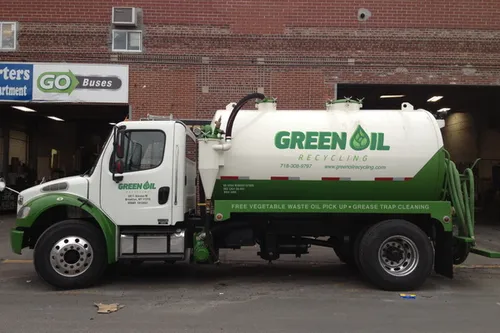
Green Oil Recycling
317 Liberty Ave, Brooklyn, NY 11207
Green Oil Recycling provides professional grease trap cleaning and used cooking oil collection services in New York, NY. They specialize in maintaining commercial kitchen grease traps, including passive hydro mechanical, large pre-cast concrete gravity traps, and auto-grease removal systems like Big Dipper. Their trained technicians thoroughly clean traps, scrape walls, and use bio-safe chemicals to break down waste oil, helping kitchens stay odorless and compliant with local regulations. Green Oil Recycling serves New York City, New Jersey, and Nassau County, ensuring all waste oil disposal meets BIC, DEC, and EPA standards. They also inspect gaskets and fittings to prevent violations and hazards, working closely with Done Right Hood & Fire Safety for comprehensive grease trap and kitchen exhaust maintenance.

New York Hood Cleaning
New York, NY
New York Hood Cleaning provides grease trap cleaning and used cooking oil collection services in New York, NY. They specialize in thorough cleaning of kitchen ducts, fans, hoods, and vents to maintain commercial kitchen operations. The company emphasizes sustainability by recycling used cooking oil for animal feed or fuel. With decades of experience, they offer skilled service using specialized tools to remove grease effectively. Their approach simplifies operations by combining multiple services under one provider, supported by responsive customer service.
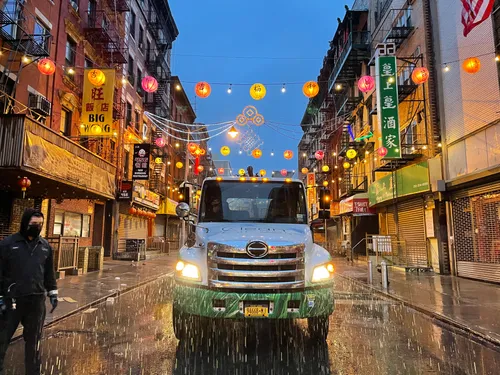
NYC Clean Air Group
154-05 12th Ave, Beechhurst, NY 11357
NYC Clean Air Group is a family-owned business serving New York, NY, and New Jersey. They specialize in used cooking oil collection, grease trap cleaning, and cesspool maintenance for restaurants, stadiums, hospitals, and commissaries across all five boroughs. The company offers licensed and insured services with options for monthly contracts or per-incident work. They emphasize environmentally friendly practices and provide same-day service and free estimates.
Grease Sharks
New York, NY
Grease Sharks is a grease trap cleaning and used cooking oil collection company based in New York, NY. They serve the Greater New York City area, including New Jersey, Westchester, and Connecticut. Their services include grease trap cleaning and maintenance, used cooking oil pick up, grease trap installation and plumbing, sewer and line jetting, and drain cleaning. With over a decade of combined experience, Grease Sharks aims to help businesses stay compliant and running smoothly. They provide scheduled maintenance tailored to client needs and offer 24/7 emergency service throughout the year.
Grease Connections
150 Commerce Rd, Carlstadt, NJ 07072
Grease Connections is a used cooking oil collection company serving New York, NY, as well as Florida, Georgia, and New Jersey. They specialize in collecting used cooking oil from restaurants and industrial kitchens, which is then filtered, refined, and shipped to U.S. processors to create biodiesel and renewable aviation fuel. The company provides licensed, spill-free pickups with digital manifests and offers optional RFID-enabled containers for real-time tracking. Grease Connections complies with EPA regulations and state-specific requirements, ensuring proper documentation for audits and inspections. Their service helps clients reduce emissions and avoid fines related to improper grease disposal.
Step-by-Step: The Used Cooking Oil Recycling Process
Understanding the standard workflow for grease pickup can help streamline your kitchen's operations and ensure compliance.
-
Service Onboarding: The process typically begins by contacting a local provider for a quote. Reputable services, like those operating in Essex County, will assess your volume and install secure, lidded collection bins at an accessible location, such as your loading dock or back door. They should also provide initial staff training on safe transfer procedures.
-
Safe Oil Transfer & Storage: After cooking, oil must be allowed to cool to a safe temperature (below 120°F) before being carefully filtered and poured into the dedicated collection container5. This prevents burns, minimizes fumes, and protects the integrity of the storage bin. The bin must remain locked when not in use to prevent contamination, pests, and unauthorized access.
-
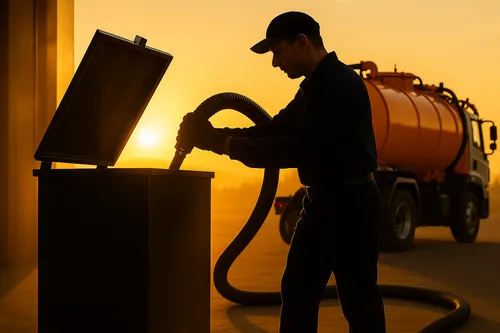
Scheduled Pickup & Documentation: When your bin is full, you schedule a pickup. A licensed hauler will arrive with a vacuum truck to collect the oil. At this point, a Uniform Used Cooking Oil Manifest is legally required. This document tracks the quantity of grease transferred from your business to the hauler, and you should receive a copy for your records. Modern providers often digitize this process, offering QR code scans or app-based confirmations for ease.
-
Recycling into Biodiesel: The collected oil is transported to a processing facility where it is cleaned and purified. It then enters the supply chain to be converted into biodiesel, a renewable fuel that powers vehicles and heats buildings6. This completes the cycle, ensuring your kitchen waste is responsibly repurposed.
Key Regulations and Compliance Checklist for Bloomfield Businesses
Staying on the right side of New Jersey's Department of Environmental Protection (NJDEP) regulations is paramount. Here's a compliance checklist tailored for Bloomfield food service establishments:
- Use a Licensed Hauler: Only contract with a grease collection service licensed to operate in New Jersey. They will carry the necessary insurance and provide compliant documentation.
- Maintain Manifest Records: For every pickup, you must complete and retain a copy of the state-required manifest. These records must be kept on file for a minimum of three years and be available for inspection by the NJDEP.
- Ensure Secure Storage: Store UCO in robust, leak-proof containers provided by or approved by your hauler. Containers must be clearly labeled and kept locked to prevent tampering or theft7.
- Prevent Spills and Contamination: Place collection bins on a stable, paved surface away from storm drains. Have spill containment materials readily available and train staff on proper cleanup procedures.
- Never Dispose in Trash: Solidified grease or oil-soaked materials should also not be placed in regular dumpsters, as they can attract pests and create sanitation issues.
Find the perfect used cooking oil collection companies for your needs
Get personalized recommendations and expert advice
Understanding Costs and Potential Rebates
The financial model for used cooking oil collection in Bloomfield often includes free pickup for service, with potential rebates paid back to the restaurant based on volume and market prices for recycled grease.
- Low-Volume Establishments: Smaller operations, such as a café generating under 100 gallons per month, often benefit from free pickup services. The hauler's revenue comes from selling the aggregated grease to recyclers, and they provide the bin and service at no charge to secure the supply.
- High-Volume Establishments: Restaurants, large cafeterias, or food production facilities with significant weekly output may be eligible for volume-based rebates. These are typically calculated per gallon and can range from $0.10 to $0.65 or more, depending on the current market value of UCO8 9. This can turn a cost center into a minor revenue stream.
- Service Considerations: When evaluating providers, look beyond price. Consider the reliability of pickup schedules, the quality and security of the bins provided, and the ease of their digital tracking and reporting systems, which are invaluable for compliance audits.
Local Service Providers in the Bloomfield Area
Several reputable companies service Essex County and Bloomfield specifically. When selecting a partner, ensure they emphasize compliance, security, and transparency.
- Grease Connections: This provider highlights services for Bloomfield and Montclair, offering streamlined onboarding, secure locking bins (some with alarm systems), and a digital platform for managing manifests and pickup history 10. They emphasize NJDEP compliance support and offer rebate programs for qualifying volumes.
- Eazy Grease: Another New Jersey-based service that promotes free, no-contract pickup options for used cooking oil. They provide collection containers and handle the recycling process, catering to businesses of various sizes11.
It is advisable to contact multiple providers to discuss your specific volume, receive quotes, and understand their processes for maintaining your required regulatory records.
Best Practices for Kitchen Staff Training
A successful UCO program relies on consistent execution by every staff member. Key training points include:
- Cooling First: Emphasize that oil must cool completely before being moved or filtered. Provide a designated, heat-safe area for pans to cool.
- Clean Transfer: Use fine mesh filters or dedicated filtering equipment to remove food particles before oil enters the storage bin. This improves the quality of the recycled product.
- Bin Management: Train staff on how to properly and securely pour oil into the bin without splashing, and to always re-lock the lid. Designate a specific staff member to be responsible for checking bin levels and scheduling pickups.
- Emergency Response: Ensure all employees know the location of spill kits and the basic steps to contain a grease spill, preventing it from entering any drains.
Implementing a clear, posted Standard Operating Procedure (SOP) for used cooking oil handling is a best practice that enhances safety, efficiency, and compliance.
Frequently asked questions
Sources
Footnotes
-
Bill S3437 - NJ Legislature - https://www.njleg.state.nj.us/bill-search/2022/S3437/bill-text?f=S3500&n=3437_I1 ↩
-
S2166 - NJ Legislature - https://pub.njleg.gov/bills/2014/S2500/2166_I1.HTM ↩
-
NJ Franchise Grease Recycling & SOPs 2025 - https://greaseconnections.com/nj-franchise-grease-recycling-sop/ ↩
-
NJ School Cafeteria Grease Checklist & Oil Disposal - https://greaseconnections.com/nj-school-cafeteria-grease-oil-disposal/ ↩
-
Used Cooking Oil Disposal: Complete Guide to Grease Pickups - https://greaseconnections.com/used-cooking-oil-disposal-guide-grease-pickups/ ↩
-
Recycling Used Cooking Oil With Green Grease Environmental - https://www.youtube.com/watch?v=KP05Yx-GkHk ↩
-
Used Cooking Oil Recycling & Grease Collection | Elizabeth - https://greaseconnections.com/locations/nj/union/elizabeth/ ↩
-
Cooking-Oil Recycling & Grease Pickup | Essex County NJ - https://greaseconnections.com/locations/nj/essex/ ↩
-
Restaurant Used Cooking Oil: Disposal, Recycling & Revenue Guide - https://greaseconnections.com/restaurant-used-cooking-oil-disposal-recycling-revenue-guide/ ↩
-
UCO Recycling & Grease Pickup | Montclair & Bloomfield - https://greaseconnections.com/locations/nj/essex/montclair-bloomfield/ ↩
-
Used Cooking Oil Recycling Service in New Jersey - https://eazygrease.com/used-cooking-oil-recycling-new-jersey/ ↩