
Find the Best Composting & Food Waste Companies for Your Business
No obligation • Fast responses • Nationwide coverage

Why you can trust Restaurant Waste Disposal
Restaurant Waste Disposal is a leading U.S. resource for comparing restaurant composting, food-waste recycling, grease trap cleaning, and used cooking oil collection services. Our editorial team researches providers, checks credentials, and organizes unbiased information so operators can make informed decisions. Companies cannot pay to change ratings or placement.
Search providers near you
Best Composting & Food Waste Companies in Michigan Ranked
For Michigan restaurant owners, managing food scraps and organic waste is becoming an increasingly important part of operations. While the state does not yet mandate commercial food waste diversion, a significant shift is underway. New county-level planning requirements and growing support for composting infrastructure are creating more voluntary options for businesses to reduce landfill waste, cut disposal costs, and contribute to a circular economy. Understanding the current landscape of services, costs, and best practices can help your establishment get ahead of potential future regulations and tap into the benefits of organics recycling.

Midtown Composting
4272 Alter Rd, Detroit, MI 48215
Midtown Composting provides food waste and composting services for restaurants in Detroit, MI. They offer weekly pickup of food scraps, including pet waste and meat, helping businesses reduce trash and compost organic materials. The company also provides lawn care and snow removal services.
Spurt Industries
2041 Charms Rd, Wixom, MI 48393
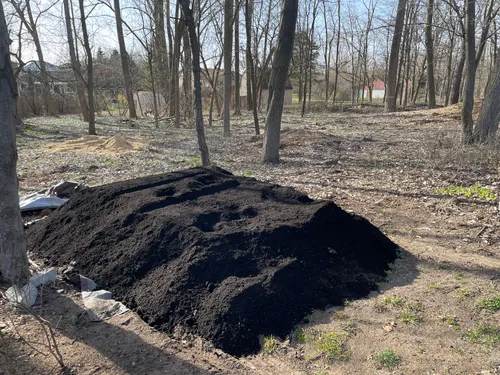
Spurt Industries is a composting and organic waste recycling company based in Novi, MI. They specialize in food waste collection for restaurants and commercial clients, as well as yard waste, brush, and clean wood recycling. Spurt produces STA certified compost and custom soil blends, serving both residential and commercial customers. Their facilities in Wixom and Rochester Hills handle large volumes of organic waste annually, contributing to sustainable soil products and environmental efforts. The company has a history of supporting local green industries and offers delivery services for compost and soil products.
Partridge Creek Compost
200 Washington St, Ishpeming, MI 49849
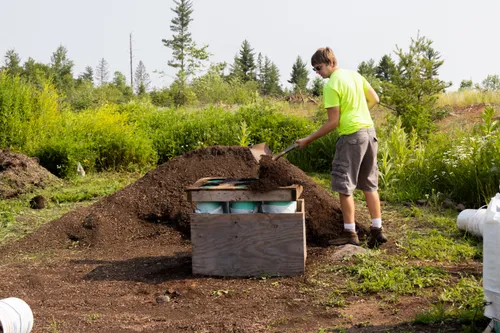
Partridge Creek Compost is a nonprofit organization based in Georgetown, MI, focused on reducing food waste and promoting composting for restaurants and the local community. Established as a separate entity in 2023 from Partridge Creek Farm, the organization works to divert food waste from landfills and produce high-quality finished compost. Their efforts support soil health improvement and community education about the environmental benefits of composting while contributing to a sustainable local food system.
Unlimited Recycling
Waterford, MI
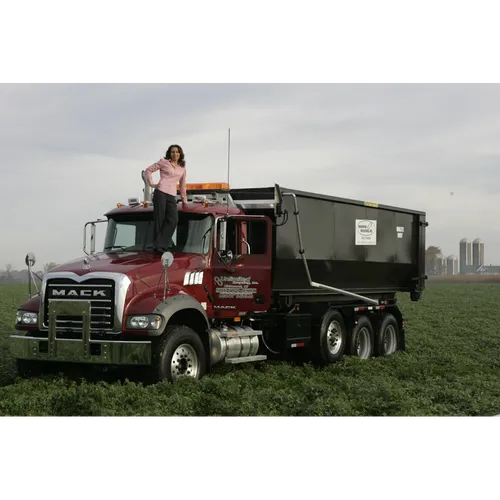
Unlimited Recycling is based in Waterford, MI, offering comprehensive recycling and waste management services for industrial, office, and restaurant clients. Their services include food waste composting, universal waste management, dumpster rentals, and specialized programs such as EV battery recycling and pallet recycling. The company focuses on sustainable waste solutions that support environmental goals and resource conservation. Unlimited Recycling also provides LEED waste management to assist construction projects in meeting green building standards. Their approach integrates safe handling and efficient processing of hazardous and non-hazardous materials, contributing to a cleaner community.
Greener Organics LLC
301 Industrial Ave, Coldwater, MI 49036
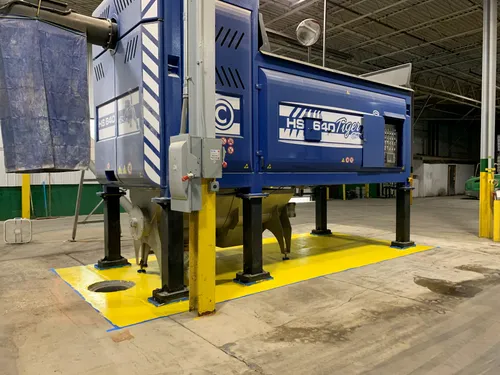
Greener Organics LLC provides food waste and composting services for restaurants in Georgetown, MI. They offer roll-off container services to haul food-related waste, general construction debris, yard waste, and bulk trash items. Using their proprietary GROWS process, they separate and process various types of food waste into byproducts that can be used for energy production, fertilizer, or nutrient-rich livestock feed. This approach supports waste reduction and recycling efforts while promoting sustainability.
Current Regulations and Policy Landscape
Michigan's approach to commercial food waste is currently characterized by voluntary action supported by emerging strategic planning. Unlike states such as California or Vermont, there is no statewide ban on sending food waste to landfills for businesses like restaurants. This means diversion is not yet a legal requirement. However, restaurants must still comply with general recycling mandates for materials like cardboard, paper, metal, and plastic 1.
The regulatory future is being shaped by the 2023 legislation that requires all 83 Michigan counties to develop comprehensive Materials Management Plans (MMPs). These plans must include strategies for recovering organic materials, which will likely lead to more coordinated regional efforts and potentially future mandates. This move signals the state's commitment to building a framework for organics diversion, making it prudent for restaurants to explore solutions now.
Voluntary Composting and Collection Services
Despite the lack of mandates, a variety of organics recycling services are available across Michigan, primarily in more populated areas. These services are typically offered by private haulers and specialized composting companies.
- Commercial Hauler Pickup: This is the most convenient option for restaurants generating consistent volumes of food scraps. Companies provide dedicated carts (e.g., 32 or 64-gallon) for kitchen scraps, spoiled produce, and even BPI-certified compostable serviceware. They handle pickup on a scheduled basis-weekly, bi-weekly, or as needed-and transport the material to a commercial composting facility.
- Drop-Off Programs: Some local farms, community gardens, or municipal drop-off sites accept food scraps from businesses. This option often requires more labor (transporting and dumping the waste yourself) but can be a cost-effective solution, especially for smaller operations or those in areas without pickup services 2 3.
- In-House Composting: For restaurants with sufficient space, on-site composting is a possibility, though it requires careful management to avoid odors and pests. This is less common for high-volume commercial kitchens but can be part of a broader waste reduction strategy.
Understanding Costs for Restaurant Services
The cost for commercial food waste collection is not standardized and varies based on several key factors. Since it's a voluntary, market-driven service, prices are set by individual providers.
- Service Volume: The size and number of collection carts directly impact price. A 64-gallon cart will cost more than a 32-gallon cart.
- Pickup Frequency: Weekly service is more expensive than bi-weekly or on-call pickup.
- Location and Hauler: Service availability and pricing differ by region. Urban areas like Detroit, Grand Rapids, or Ann Arbor typically have more competitive options than rural counties.
- Bundled Services: Some waste management companies offer discounted rates if you bundle organics recycling with your existing trash and recycling pickup.
While exact figures are provider-specific, restaurants can generally expect starting costs in the range of $50 to $100 or more per month for a basic cart and pickup service, with costs scaling up significantly for larger volumes and more frequent collection 4. It's essential to get quotes from multiple local haulers to find the best fit for your operation.
State Initiatives and Support
The Michigan Department of Environment, Great Lakes, and Energy (EGLE) is actively working to build the state's capacity for organics recycling. A cornerstone of this effort is the Michigan Food Waste Roadmap, a strategic plan to reduce food waste and develop the necessary markets and infrastructure for composting 5. This includes:
- Providing technical assistance and resources for businesses.
- Seeking federal and state funding to support new composting facilities and expand existing ones.
- Promoting research and development for compost products to create stable end markets.
These initiatives aim to make organics diversion more accessible and economically viable statewide, which will benefit restaurants in the long term by lowering service costs and increasing reliability 6.
Find the perfect composting & food waste companies for your needs
Get personalized recommendations and expert advice
Best Practices for Restaurant Food Waste Reduction
Implementing a composting program is most effective when paired with source reduction strategies. This not only minimizes your environmental footprint but can also improve your bottom line.
- Conduct a Waste Audit: Track what and how much food is being thrown away. This data can reveal opportunities for menu adjustments, portion control, and inventory management.
- Prioritize Food Donation: Partner with local food banks or shelters to donate safe, surplus food. Michigan has protections for food donors, making this a valuable community and waste-reduction strategy.
- Train Your Staff: Educate kitchen and front-of-house teams on proper sorting procedures to avoid contamination of the compost stream with plastics or other non-compostables.
- Optimize Menu and Inventory: Use your waste audit insights to adjust purchasing, improve storage, and create menu items that utilize food trimmings (e.g., stocks, sauces).
The Future of Organics in Michigan
The trajectory in Michigan points toward greater emphasis on diverting food waste from landfills. The required county Materials Management Plans will likely identify local needs and gaps in service, potentially leading to more public-private partnerships and expanded hauler routes 7 8. As infrastructure and markets mature, the cost and convenience of composting services for restaurants are expected to improve. Proactive restaurants that establish systems now will be well-positioned to adapt efficiently if and when county or state-level diversion requirements are enacted.
Frequently asked questions
Sources
Footnotes
-
Restaurant Operator's Guide To Environmental Regulations Across ... - https://www.restaurantware.com/blogs/eco-friendly-solutions/restaurant-operators-guide-to-environmental-regulations-across-the-us ↩
-
Food Waste and Recovery - https://www.michigan.gov/egle/about/organization/materials-management/composting/food-waste ↩
-
Can Michigan fix its food waste problem with composting? - https://planetdetroit.org/2025/05/michigan-food-waste-composting/ ↩
-
Composting Resources for Businesses | Ottawa County, MI - https://miottawa.org/health/es/composting/businesses/ ↩
-
Composting and Organics Management - State of Michigan - https://www.michigan.gov/egle/-/media/Project/Websites/egle/Documents/Programs/MMD/Compost/Composting-Organics-Management.pdf ↩
-
Michigan Food Waste Roadmap: A Plan to Reduce ... - https://www.michigan.gov/egle/-/media/Project/Websites/egle/Documents/Programs/MMD/Pollution-Prevention/Food-Waste-Reduction/Michigan-Food-Waste-Roadmap.pdf?rev=33772b76b62f461b92210a957adabad7&hash=BAE0504470C86BB01F22BB81B3FE816B ↩
-
Rotting food, rising heat: How Michigan's landfills help drive ... - https://planetdetroit.org/2025/05/michigan-food-waste-crisis/ ↩
-
Michigan - Rethink Food Waste - ReFed Policy Finder - https://policyfinder.refed.org/michigan/ ↩