Find the Best Composting & Food Waste Companies for Your Business
No obligation • Fast responses • Nationwide coverage

Why you can trust Restaurant Waste Disposal
Restaurant Waste Disposal is a leading U.S. resource for comparing restaurant composting, food-waste recycling, grease trap cleaning, and used cooking oil collection services. Our editorial team researches providers, checks credentials, and organizes unbiased information so operators can make informed decisions. Companies cannot pay to change ratings or placement.
Search providers near you
Best Composting & Food Waste Companies in Indiana Ranked
For restaurant operators in Indiana, managing food scraps and organic waste presents both a challenge and an opportunity. Unlike some states with strict mandates, Indiana's approach to commercial food waste is largely decentralized, placing the initiative on individual businesses and local communities. This means you have the flexibility to design a program that fits your operational and sustainability goals, whether driven by cost savings, environmental responsibility, or community engagement. Understanding the local landscape-from available haulers to potential partnerships with food banks-is the first step toward turning waste into a resource.
Dirt Wain
Fort Wayne, IN
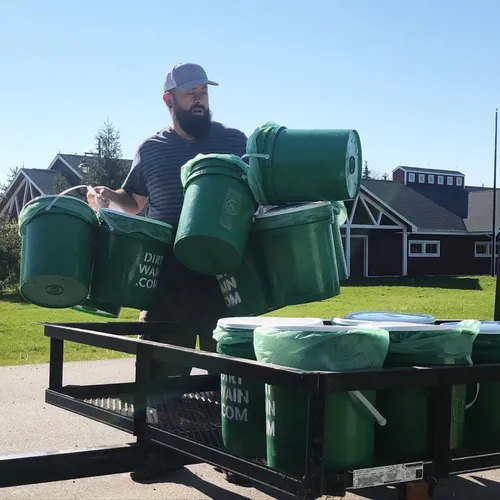
Dirt Wain is a composting service based in Fort Wayne, IN, specializing in food waste and composting solutions for restaurants and local residents. They offer convenient pick-up services for food scraps and yard waste, turning these materials into nutrient-rich compost through environmentally sustainable practices. Since 2019, Dirt Wain has composted over 1,650 tons of organic waste, supporting a greener future for Fort Wayne and Northeast Indiana. Customers receive buckets or bins for collecting compostables, which are then collected regularly and processed on-site.
Green with Indy
3514 Calibogue Cir, Indianapolis, IN 46228
Green with Indy is a composting service based in Indianapolis, IN, specializing in food waste collection and composting for restaurants. The company focuses on diverting biodegradable waste from landfills to prevent environmental contamination and enrich soil through composting. Green with Indy supports local sustainability efforts and community initiatives such as the "Sip Smart, Sip Green" movement, promoting waste reduction and ethical sourcing. They provide compost collection services with scheduled pickups and deliver composting bins to participating businesses.
Understanding Indiana's Regulatory Landscape
Indiana does not have statewide landfill bans or mandatory organics recycling laws for commercial entities like restaurants 1. This regulatory structure means your business is not legally required to separate food waste from the general trash stream. The absence of a top-down mandate shifts the focus to local government initiatives and voluntary business action. It's crucial to check with your specific city or county for any ordinances that might apply, as rules can vary significantly from one municipality to another 1.
This local-control framework offers restaurants a chance to pilot programs without the pressure of immediate compliance deadlines. You can start small, perhaps by separating pre-consumer kitchen scraps, and scale your efforts based on what works for your team and budget. The key takeaway is that participation in food waste diversion in Indiana is currently a choice, often motivated by sustainability objectives or the potential for reducing overall waste management costs 2.
Local Initiatives and Community Programs
While state mandates are absent, several Indiana communities have launched their own initiatives to encourage organics recycling. These local programs often serve as valuable models and support networks for restaurants looking to begin.
- Bloomington and Monroe County: This area is a leader in local organics management. Community efforts actively encourage food donation and composting. Restaurants can work with private haulers who transport separated food scraps to permitted composting facilities.
- Voluntary Participation: In cities with active programs, restaurant participation is typically voluntary. These programs often provide resources, such as guidelines for separating pre- and post-consumer food waste, to make the process easier for businesses.
Engaging with these local programs can provide access to established hauling routes and processing facilities, simplifying the logistics of starting a diversion program for your restaurant.
Options for Managing Restaurant Food Waste
Indiana restaurants have several pathways for diverting food waste from landfills. The best option often depends on your location, volume of waste, and operational capacity.
1. Partnering with Private Haulers This is a common solution, especially in areas with active composting communities. You contract with a waste management company that offers commercial organics collection. These haulers provide dedicated bins for food scraps and transport the material to a registered composting facility 3. This hands-off approach is often the easiest to integrate into existing back-of-house operations.
2. Food Donation Programs Donating edible, surplus food is a powerful way to address waste and support the community. Partnering with local food banks, shelters, or charities can redirect food that would otherwise be composted or trashed. Many organizations offer guidance on safe food handling for donation, helping you navigate liability protections under the Bill Emerson Good Samaritan Food Donation Act.
3. On-Site Processing For restaurants with sufficient space and volume, on-site solutions like commercial composters or dehydrators can be considered. These systems process waste on your property, potentially creating a usable product like compost or soil amendment. This option requires a higher upfront investment and staff training but offers maximum control and can eliminate hauling fees for organic waste.
4. Community Drop-Off Points Some local programs may offer designated drop-off locations for businesses to bring their separated food scraps and compostable materials. This can be a cost-effective solution for smaller establishments that don't generate enough volume to justify a dedicated pickup service 4.
Find the perfect composting & food waste companies for your needs
Get personalized recommendations and expert advice
Working with Composting Facilities
Any facility that processes food waste in Indiana must be registered with the Indiana Department of Environmental Management (IDEM) and comply with state regulations concerning odor, leachate, and vector control 5. When selecting a hauler or considering a drop-off location, it's prudent to ask where the material is being taken. Using a IDEM-registered facility ensures the organic waste is being processed responsibly and in accordance with state environmental standards. This due diligence helps guarantee your sustainability efforts have a legitimate, positive end result.
Financial Considerations and Potential Savings
The cost of implementing a food waste program in Indiana is not fixed and varies by provider, location, and the volume of material you divert 6. You will need to request quotes from local haulers for organics collection services.
However, it's important to view this as part of your overall waste management budget. A significant potential benefit is cost savings on your traditional trash disposal. By removing heavy, wet organic material from your garbage bins, you may be able to reduce the size or frequency of your solid waste pickups 7 8. For many restaurants, the savings on trash hauling can partially or fully offset the new cost of organics recycling, creating a compelling financial incentive alongside environmental benefits.
Building a Successful Program in Your Restaurant
Starting a food waste diversion program requires planning. Begin by conducting a waste audit to understand what you're throwing away and in what quantities. Engage your staff from the outset; their buy-in is critical for proper sorting. Clearly label bins for compost, trash, and recycling, and consider placing them in strategic locations in the kitchen and dishwashing area. Start with a pilot, perhaps just focusing on fruit and vegetable prep waste, before expanding to other compostable materials. Documenting your process and results can help you refine the program and demonstrate its value.
The Broader Impact of Food Waste Diversion
Beyond potential cost savings, diverting food waste has meaningful impacts. It reduces greenhouse gas emissions from landfills, where decomposing organics produce methane. It creates nutrient-rich compost that can revitalize local soils. Donating surplus food directly addresses food insecurity in your community. For your restaurant, a visible commitment to sustainability can strengthen your brand, appeal to environmentally conscious customers, and improve employee morale by contributing to a purposeful workplace culture.
Frequently asked questions
Sources
Footnotes
-
Indiana Food Waste Policy - https://policyfinder.refed.org/indiana/ ↩ ↩2
-
Organics Policy and Composting Regulations: A Guide to Laws in ... - https://www.imperialdade.com/blog/organics-policy-and-composting-regulations ↩
-
FACT SHEET - Retail Industry Leaders Association - https://www.rila.org/resources.download?downloadPath=%2Fgetmedia%2F8b9f81ef-db9e-40f7-a37a-291a768effa0%2FMandatory-Organics-Recycling-Regulations-Fact-Sheet-1-23.pdf%3Fext%3D.pdf&downloadTitle=Mandatory%20Organics%20Recycling%20Regulations ↩
-
Restaurant Operator's Guide To Environmental Regulations Across ... - https://www.restaurantware.com/blogs/eco-friendly-solutions/restaurant-operators-guide-to-environmental-regulations-across-the-us ↩
-
IDEM: Managing Waste: Yard Waste and Composting Facilities - https://www.in.gov/idem/waste/waste-industries/yard-waste-and-composting-facilities/ ↩
-
MONROE COUNTY SOLID WASTE MANAGEMENT DISTRICT ... - https://bloomington.in.gov/onboard/reports/423/download ↩
-
Section 04 Waste Management - City of Bloomington, Indiana - https://bloomington.in.gov/sites/default/files/2021-04/Bloomington%20CAP%2004%20Waste%20Management.pdf ↩
-
The Benefits of Recycling in the Commercial Kitchen (Part 1) - https://www.southernwasteinformationexchange.com/the-benefits-of-recycling-in-the-commercial-kitchen-part-1/ ↩