
Find the Best Used Cooking Oil Collection Companies for Your Business
No obligation • Fast responses • Nationwide coverage

Why you can trust Restaurant Waste Disposal
Restaurant Waste Disposal is a leading U.S. resource for comparing restaurant composting, food-waste recycling, grease trap cleaning, and used cooking oil collection services. Our editorial team researches providers, checks credentials, and organizes unbiased information so operators can make informed decisions. Companies cannot pay to change ratings or placement.
Search providers near you
Top Used Cooking Oil Collection Companies in Ankeny, Iowa Ranked
For restaurants and food service businesses in Ankeny, managing used cooking oil (UCO) is a critical operational task that, when handled correctly, can turn a waste product into a valuable resource. Proper grease collection and recycling not only ensure compliance with local and state regulations but also contribute to a cleaner local environment by diverting material from landfills and supporting the production of biodiesel. By partnering with a licensed hauler, Ankeny establishments can streamline their waste oil management, often at little to no cost, while supporting Iowa's growing biofuel industry. This guide outlines the essential steps for setting up a compliant and efficient used cooking oil recycling program in Ankeny.
Understanding Used Cooking Oil Recycling
Used cooking oil recycling is the process of collecting spent fryer oil and grease from commercial kitchens to be processed into new products, primarily biodiesel fuel. This process transforms a potential waste disposal problem into a sustainable commodity. In Ankeny, this service is typically provided by specialized haulers who handle the entire logistics chain, from providing storage containers to scheduling regular pickups and ensuring the oil is delivered to certified processors. For the restaurant, this means a hands-off solution for a messy byproduct, with the added benefit of contributing to the circular economy right here in Iowa.
Setting Up Your Collection Service
Getting started with a professional grease collection service in Ankeny is a straightforward process designed to integrate seamlessly with your kitchen's operations.
Finding a Licensed Hauler Your first step is to contact a licensed used oil hauler that services the Ankeny area. Reputable providers, such as Grand Natural, will conduct an initial assessment of your needs 1. They will evaluate your average weekly oil usage, available space for a storage container, and desired pickup frequency. This consultation ensures the service is tailored to your specific volume and operational flow.
Container Placement and Setup Based on your volume, the hauler will provide a secure, leak-proof storage container, often at no upfront cost. For smaller volumes, this might be a manageable indoor bin. For most restaurants, it involves placing a larger, durable outdoor tank, typically ranging from 40 to 300 gallons in capacity 2. The hauler will position this container on a level, stable surface, ideally under some form of overhead protection and away from public access points to prevent tampering or accidental damage.
Best Practices for Storage and Preparation
How you handle the oil before it reaches the storage container directly impacts its value, the efficiency of pickup, and your compliance with regulations.
Proper Storage Protocols Iowa administrative code (IAC 567-119) and local Ankeny ordinances have specific rules for used oil management to prevent environmental contamination 3. Containers must be clearly labeled, kept closed with locking lids when not in use, and be in good condition without leaks or severe rust 4. Securing the container with a lock is highly recommended to prevent theft, as used cooking oil has a market value. Outdoor containers should be placed on a paved surface to contain any potential spills.
Oil Preparation for Maximum Value To ensure your oil is accepted for recycling and to qualify for the best possible service terms, follow these preparation steps:
- Cool Completely: Always allow oil to cool to a safe temperature before transferring it from fryers to the storage container.
- Filter Solids: Use a strainer to remove large food particles and debris. Cleaner oil is more valuable and less likely to cause issues during pumping or processing.
- Avoid Contaminants: Never mix used cooking oil with water, soap, chemicals, or other liquids. Contamination significantly reduces the oil's value for biodiesel production and can lead to service issues or fees 5.
Adhering to these practices not only keeps your storage area cleaner and safer but also positions you to potentially earn rebates from your hauler.
The Pickup and Recycling Process
Once your service is established, the collection process follows a reliable cycle.
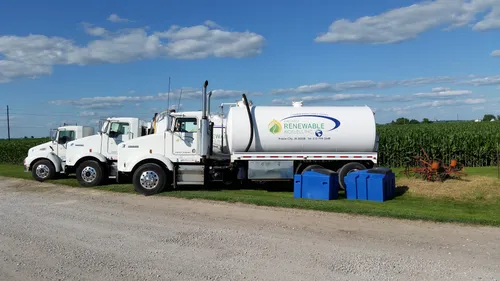
Scheduled Collection Your hauler will establish a regular pickup schedule-whether weekly, bi-weekly, or monthly-based on your oil production volume. On the scheduled day, a service truck equipped with specialized pumping equipment will arrive, connect to your storage container, and safely transfer the oil into the truck's tank 6. The process is quick, clean, and designed to minimize disruption to your business.
From Waste to Resource After collection, the used cooking oil begins its transformation. It is transported to a processing facility where it undergoes filtration, purification, and chemical processing. The primary end product is biodiesel, a renewable fuel that can power diesel engines with a significantly lower carbon footprint than petroleum diesel 7. This closed-loop system means the oil from Ankeny restaurants can help fuel local farms, trucks, and businesses, completing a sustainable cycle.
Find the perfect used cooking oil collection companies for your needs
Get personalized recommendations and expert advice
Compliance and Documentation
Staying compliant with regulations is a key benefit of professional used cooking oil collection. Licensed haulers are well-versed in Iowa's used oil rules, which mandate proper storage, labeling, and that the oil is ultimately delivered to a legitimate recycling or re-refining facility 8 9. As part of their service, reputable providers will supply you with documentation, such as waste manifests or recycling certificates, for your records. This paperwork is crucial for demonstrating due diligence and environmental responsibility during any regulatory review or audit.
Cost Structure and Potential Rebates
One of the most common questions from Ankeny restaurant owners is about the cost. The pricing model for used cooking oil collection is primarily volume-based and often works in the restaurant's favor.
Free Pickup for Lower Volumes For establishments generating less than approximately 100 gallons of used oil per month, collection is typically offered as a free service 10. The hauler's revenue in this model comes from selling the aggregated oil to biodiesel producers. Providing clean, contaminant-free oil is essential for maintaining this free service arrangement.
Rebates for Higher Volumes If your kitchen produces a significant volume of high-quality used oil, you may transition from a free service to a rebate program. For medium-volume producers (e.g., 100-300 gallons per month), small rebates in the range of $0.10 to $0.25 per gallon may be available, which can offset any minor service fees 11. High-volume producers exceeding 300 gallons per month of clean oil can often negotiate more significant rebates, potentially ranging from $0.25 to over $0.65 per gallon, turning your used oil into a minor revenue stream or fully covering the cost of related services 12.
Frequently asked questions
Sources
Footnotes
-
Used Cooking Oil Pickup and Recycling Services in Ankeny - https://www.grandnatural.com/locations/used-cooking-oil-recycling-in-ankeny.html ↩
-
Grease Collection Service: What is it - Grand Natural Inc - https://www.grandnaturalinc.com/blog/what-is-grease-collection-service.html ↩
-
112.09 STORAGE OF RECYCLABLE MATERIALS. - https://codelibrary.amlegal.com/codes/ankeny/latest/ankeny_ia/0-0-0-3894 ↩
-
Restaurant Oil Disposal: Explained - Eazy Grease - https://eazygrease.com/how-do-restaurants-get-rid-of-their-oil/ ↩
-
How to Store and Prepare Used Cooking Oil for Free Pickup - https://greaseconnections.com/how-to-store-and-prepare-used-cooking-oil-for-free-pickup/ ↩
-
Used Cooking Oil (UCO) Collection Service For Restaurants - https://thegreasecompany.com/blog/restaurant-used-cooking-oil-collection/ ↩
-
What Happens To The Used Cooking Oil Once It Leaves Your Restaurant? - https://www.grandnatural.com/blog/what-happens-to-the-used-cooking-oil-once-it-leaves-your-restaurant.html ↩
-
Used Oil | Iowa Waste Reduction Center - https://iwrc.uni.edu/environmental-assistance/regulatory-information/used-oil ↩
-
Chapter 567-119 - Iowa Administrative Code - https://www.legis.iowa.gov/docs/iac/chapter/02-05-2025.567.119.pdf ↩
-
Used Cooking Oil Pickup vs Drop-Off - GreasePros Recycling - https://www.greaseprosrecycling.com/used-cooking-oil-pickup-vs-drop-off/ ↩
-
Restaurant Used Cooking Oil Recycling & Disposal Guide - https://greaseconnections.com/restaurant-used-cooking-oil-disposal-recycling-revenue-guide/ ↩
-
Used Cooking Oil Disposal: Complete Guide to Grease Pickups - https://greaseconnections.com/used-cooking-oil-disposal-guide-grease-pickups/ ↩