Find the Best Composting & Food Waste Companies for Your Business
No obligation • Fast responses • Nationwide coverage

Why you can trust Restaurant Waste Disposal
Restaurant Waste Disposal is a leading U.S. resource for comparing restaurant composting, food-waste recycling, grease trap cleaning, and used cooking oil collection services. Our editorial team researches providers, checks credentials, and organizes unbiased information so operators can make informed decisions. Companies cannot pay to change ratings or placement.
Search providers near you
Best Composting & Food Waste Companies in Montana Ranked
For restaurant owners and managers in Montana, managing food scraps and organic waste is a practical challenge with significant environmental and financial implications. While the state does not mandate commercial food waste diversion, a growing network of local services and a strong emphasis on voluntary best practices offer clear pathways to reduce landfill impact, cut disposal costs, and enhance sustainability credentials. This guide outlines the current landscape for organics recycling in Montana, from regulatory policies and available collection services to actionable strategies for waste reduction and donation.
Happy Trash Can Curbside Compost
2143 Story Mill Rd, Bozeman, MT 59715
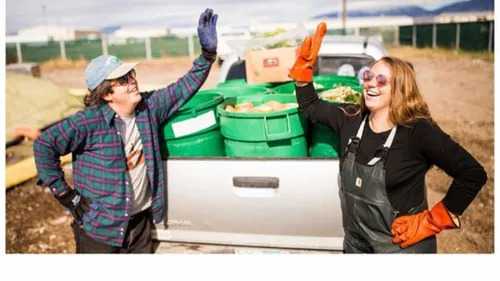
Happy Trash Can Curbside Compost provides food waste and composting services for restaurants and residences in Bozeman, MT. Since 2016, they have been collecting food scraps from households, restaurants, grocery stores, and offices, turning over 2.5 million pounds of food waste annually into finished compost. Their service includes curbside pickup with easy-to-use containers and a compost give-back program that supplies high-quality compost to local gardens and farms. The company focuses on building resilient, regenerative systems by closing the loop on food waste and restoring local soils.
YES Compost
215 Arden Dr #31, Belgrade, MT 59714
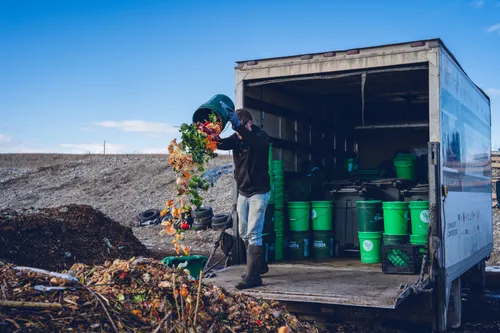
YES Compost is a food waste and composting service based in Bozeman, MT, specializing in vermiculture to transform food scraps into nutrient-rich soil amendments. They offer residential and commercial food scrap collection, using worms to break down organic matter and create YES Worm Castings. Founded in 2014, the company aims to reduce landfill waste and support healthy soil cycles in the Bozeman and Big Sky area.
Understanding Montana's Regulatory Landscape
Montana operates without a statewide mandate requiring restaurants to separate food waste or banning organic materials from landfills 1. This regulatory approach places the decision to pursue composting and food waste recycling squarely in the hands of individual business owners. The focus at the state level is on encouragement and education rather than enforcement, promoting source reduction and donation as primary strategies.
However, this lack of a top-down mandate doesn't mean an absence of structure. The federal Environmental Protection Agency (EPA) promotes regional solutions, particularly encouraging large waste generators-those producing more than 26 tons of wasted food per year-to explore separation and composting if local processing capacity exists2 3. For Montana restaurants, this underscores the importance of investigating local and municipal options, as the most relevant rules and services will be found at the city or county level.
Local Programs and Collection Services
The availability of food scrap collection varies significantly across Montana's vast geography. Proactive cities have developed programs to serve their business communities.
Missoula's Commercial Composting Program The city of Missoula provides a leading example of a local organics recycling solution. Through services like Missoula Compost, restaurants can subscribe to commercial pickup. Businesses can choose from different bin sizes to match their volume, including 32-gallon, 64-gallon, and bear-resistant options 4. This service transforms food scraps, soiled paper, and other compostables into a valuable soil amendment, closing the loop locally.
Finding Services in Other Areas Outside of specific municipal programs, restaurants must often seek out private waste haulers or regional service providers that offer organics collection. The key is to contact your current waste management provider to inquire about separate food waste pickup or to search for specialized compost haulers in your region5. Some counties or solid waste districts may also operate drop-off sites for commercial food waste, though this is less common for high-volume restaurant operations.
Financial Considerations: Costs and Potential Savings
Implementing a food waste diversion program involves an investment, but it can also lead to operational savings.
Collection Service Costs Pricing is typically based on the frequency of pickup and the size or number of bins provided. Using Missoula as a reference point, monthly costs can range from approximately $36 for a 32-gallon bin to around $89 for a 96-gallon bin6 7. These figures will vary by provider and location, so obtaining local quotes is essential.
Offsetting Expenses with Reduced Disposal Fees The financial benefit often comes from reducing the volume of trash sent to the landfill. By separating heavy, wet organics, restaurants can frequently downsize their standard garbage dumpster or reduce the frequency of trash pickups. Given that landfill tipping fees are often calculated by weight or volume, diverting food waste can directly lower your overall waste management bill. The savings on trash service can partially or fully offset the new cost of compost collection.
Find the perfect composting & food waste companies for your needs
Get personalized recommendations and expert advice
Prioritizing Food Donation and Source Reduction
Before focusing on composting, the most impactful and cost-effective strategy is to prevent food from becoming waste in the first place. Montana's guidance strongly emphasizes this hierarchy: reduce surplus, donate edible food, then compost inedible scraps8 9.
Building a Donation Partnership Montana is home to a network of food banks, pantries, and charitable organizations that can accept surplus edible food from restaurants. Donating food not only supports the community but may also offer tax benefits. The first step is to connect with a local food rescue organization to understand their acceptance policies, pickup schedules, and liability protections offered under the federal Bill Emerson Good Samaritan Food Donation Act.
Conducting a Waste Audit To effectively reduce waste at the source, begin by understanding what and how much you are throwing away. A simple waste audit over a few days can identify prep trim waste, spoilage, plate waste, and overproduction. This data is invaluable for making adjustments in purchasing, storage, prep techniques, and portion sizes, leading to direct food cost savings.
Implementing an Effective On-Site System
Successfully diverting food waste requires planning and staff engagement.
Bin Placement and Signage Place clearly labeled collection bins in key areas: the prep kitchen for trim waste, the dish station for plate scrapings, and potentially in customer-facing areas for compostable serviceware. Use simple, visual signage (often available from your hauler) to educate both staff and customers on what goes in the compost bin versus trash or recycling.
Staff Training and Buy-In The program will only work with team participation. Hold a brief training session to explain the "why" behind the new system and provide clear, hands-on instructions. Designate a sustainability champion on staff to help answer questions and ensure consistency. Recognizing team efforts can help maintain momentum.
Choosing Compatiable Materials If you use disposable items, ensure they are certified compostable if they are to go into the organics stream. Contamination from conventional plastics can ruin a load of compost. Work with your composter to get a list of accepted materials, which typically includes food scraps, napkins, paper towels, and certified compostable bags and serviceware.
Navigating Challenges and Future Trends
Restaurants in rural areas may face the biggest hurdle: a lack of local composting infrastructure or hauling services. In these cases, the focus may initially need to be entirely on aggressive source reduction and donation. Some businesses explore on-site solutions like small-scale composters or dehydrators, though these require space and management.
The regulatory landscape is dynamic. While Montana has no current mandates, many states and cities are adopting organics recycling laws10. Staying informed about local policy discussions is wise, as early adoption of composting practices positions your business ahead of potential future requirements and meets growing customer expectations for sustainable operations.
Frequently asked questions
Sources
Footnotes
-
Food Waste Bans and Targets - State Climate Policy Dashboard - https://www.climatepolicydashboard.org/policies/industry-materials-waste/food-waste-bans ↩
-
Montana : ReFED | Rethink Food Waste - https://policyfinder.refed.org/montana/ ↩
-
Regional Resources to Reduce and Divert Wasted Food ... - https://www.epa.gov/sustainable-management-food/regional-resources-reduce-and-divert-wasted-food-across-united-states ↩
-
RECYCLING & COMPOSTING - Eco-Cycle - https://ecocycle.org/content/uploads/2024/11/2024-State-of-Recycling-and-Composting-in-CO_Eco-Cycle_CoPIRG_web.pdf ↩
-
Restaurant Waste Solutions in Montana - https://restaurantdisposal.com/food-waste-recycling/mt ↩
-
Commercial Composting - Restaurants & Businesses in Missoula - https://www.missoulacompost.com/commercial-restaurants-businesses ↩
-
Organic Waste Bans And Recycling Laws To Tackle Food Waste - https://www.biocycle.net/organic-waste-bans-recycling-laws-tackle-food-waste/ ↩
-
Fresh Look At Organics Bans And Waste Recycling Laws - https://chlpi.org/news-and-events/news-and-commentary/food-law-and-policy/fresh-look-at-organics-bans-and-waste-recycling-laws/ ↩
-
Montana : ReFED | Rethink Food Waste - https://policyfinder.refed.org/montana/ ↩
-
Organics Policy and Composting Regulations: A Guide to Laws in Your Area - https://www.imperialdade.com/blog/organics-policy-and-composting-regulations ↩